
SYMBIOSIS (2024-25)
A hybrid system of print, sound, & digital interaction.
Symbiosis examines how creative intuition shifts when another intelligence enters the work. It brings print, sound, and digital media into one environment and lets each medium alter how the others are perceived. The project asks how meaning forms when human intention meets machine behavior, and how structure alone can guide attention and emotion.
Symbiosis borrows its name from ecology—the concept of separate species sharing an environment, altering one another’s behavior...
This project applies this idea to a system of three media: printed liner-note booklets, a human–AI concept album, and a set of interactive text-based simulations. Each piece operates differently on its own; together, they form an environment that explores the intersection of human and artificial intelligence.
Initially, I wanted to understand how creative intuition changes when an artificial intelligence enters the process as a contributor to not just content but ideas. Instead of treating AI as a stylistic effect, Symbiosis treats it as one independent influence within the ecosystem. The system asks what forms of authorship and emotional tone emerge when human judgment, machine output, and material design all press against each other.
This project places a particular emphasis on the role generative artificial intelligence has on the publishing industry. Users are guided through interactive interviews with artists and researchers, as well as personalized text-based simulations that ask the user to imagine the granular impacts of AI on publishing workflows.

Visual Language
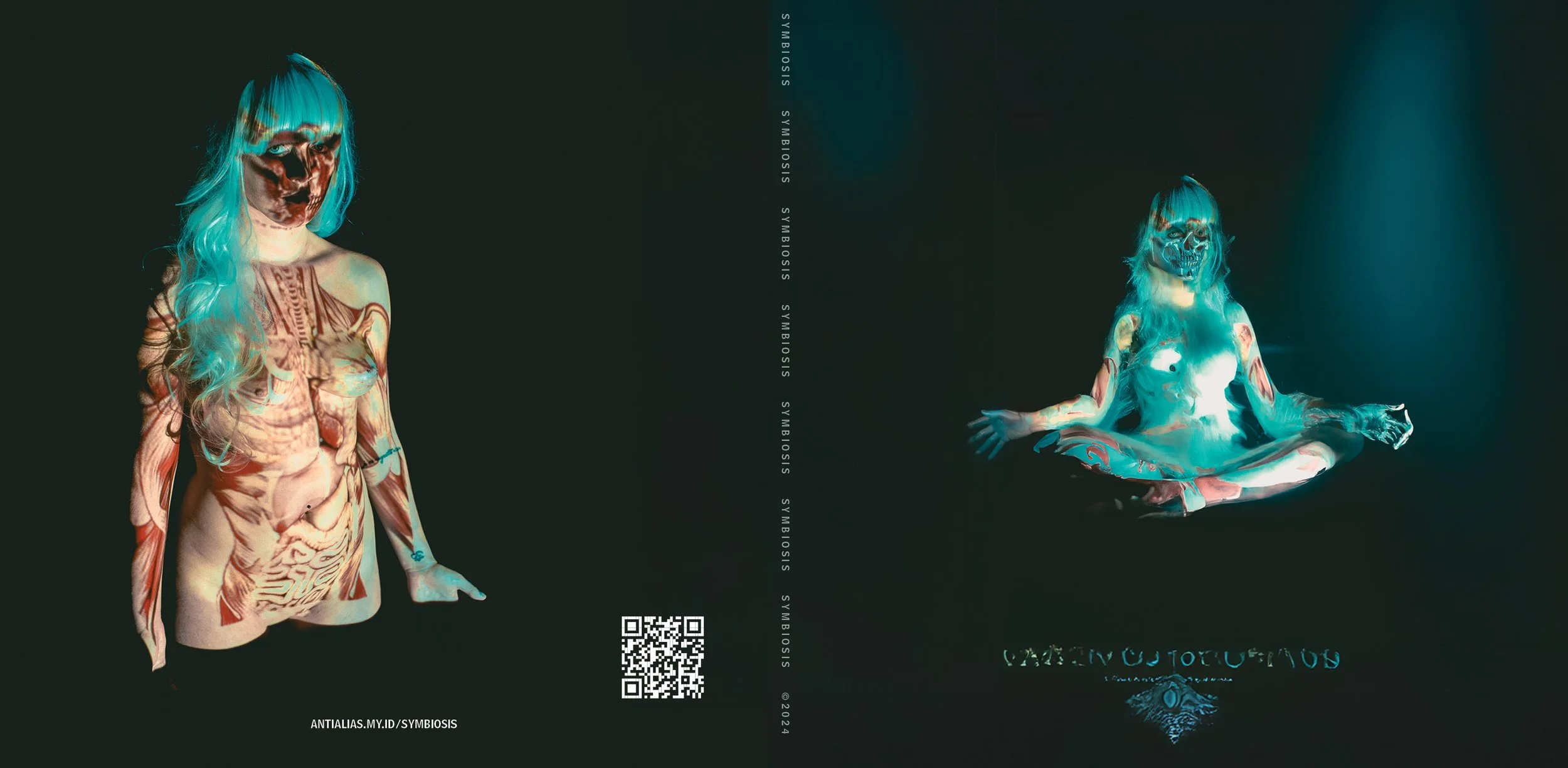
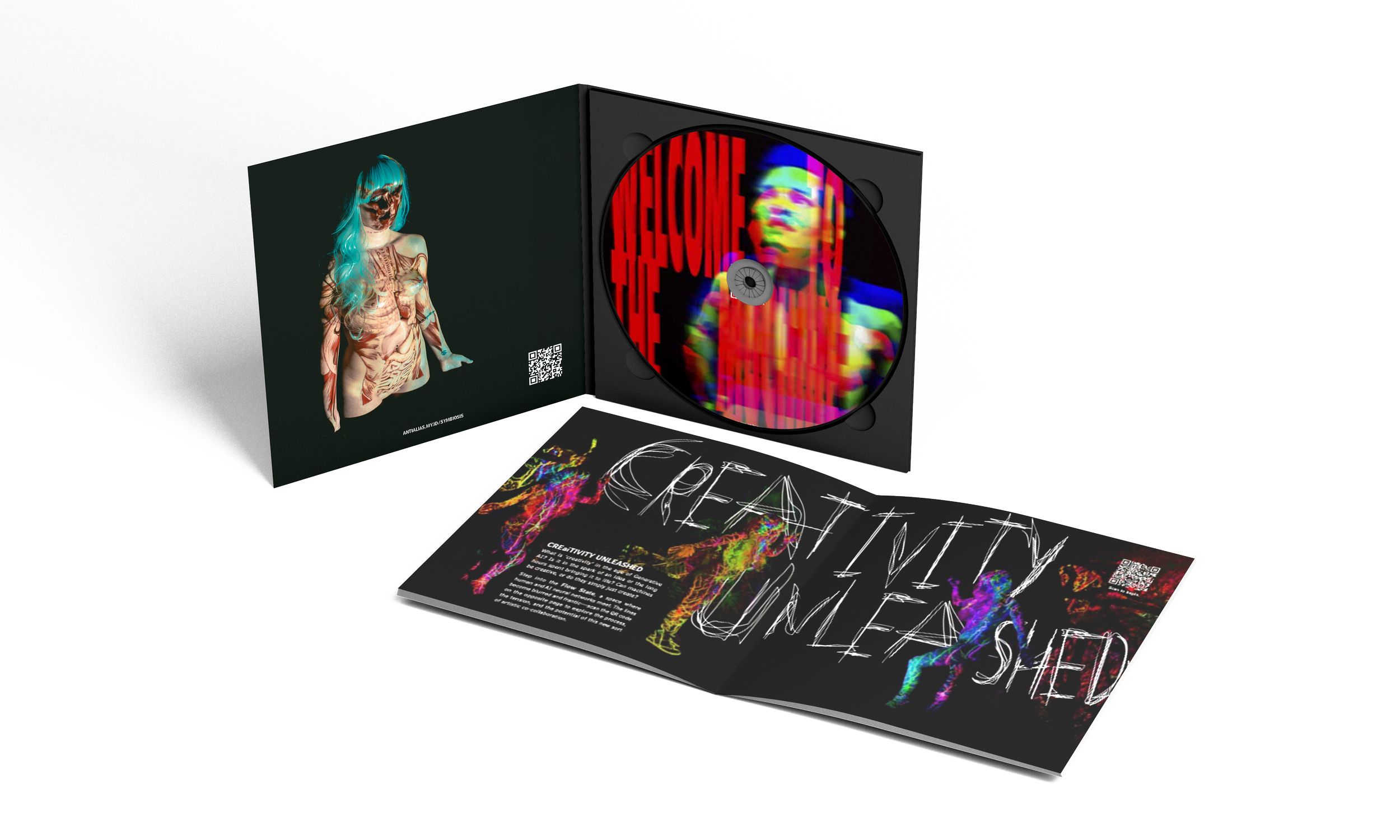
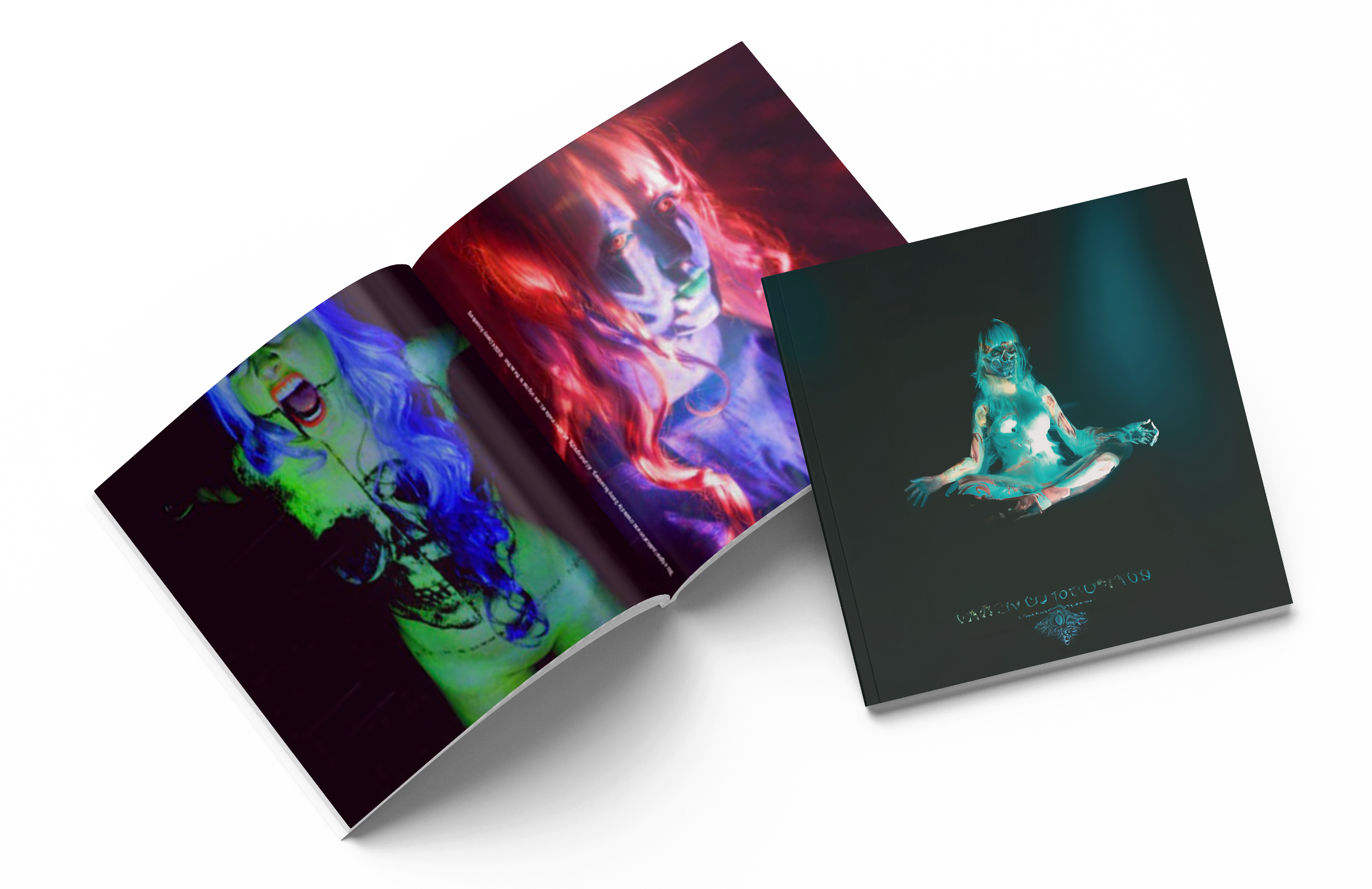
The project uses a series of images created by projecting natural, artificial, and machine-generated visuals onto a model’s body. The poses and expressions were captured to produce a human surface that carries both organic and technological influence. These hyper-saturated images form the visual language of Symbiosis; they appear on the cover, across the booklet, and within the digital layers as the system’s primary aesthetic environment.
Components
Digipak Prototype — A CD-style case that holds a printed booklet and the album Capitalist Death Machine.
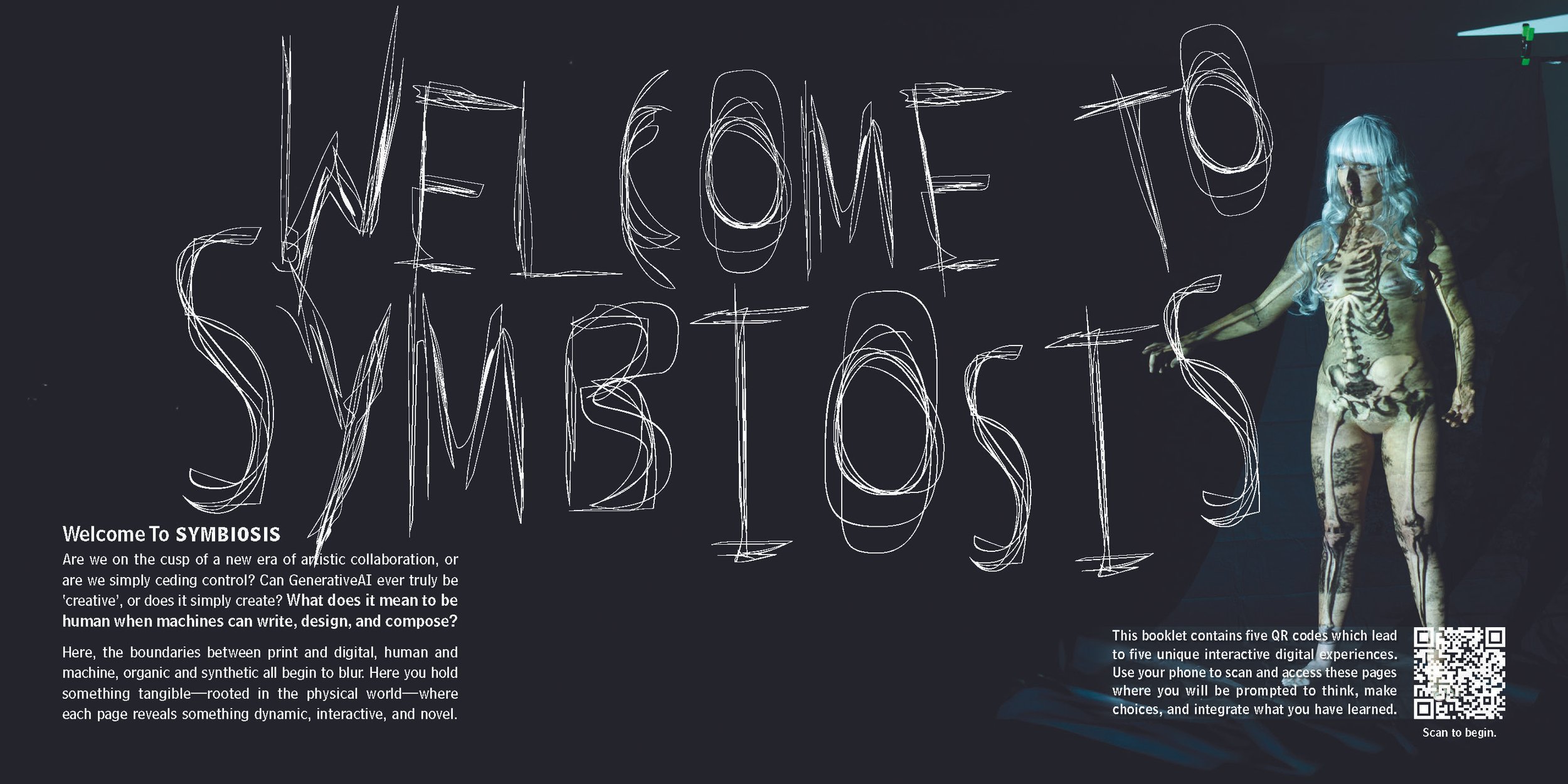
Print Booklet — Sequences of images and short prompts, paced to slow the reader and set the emotional tone of the system. QR codes direct to interactive simulations.
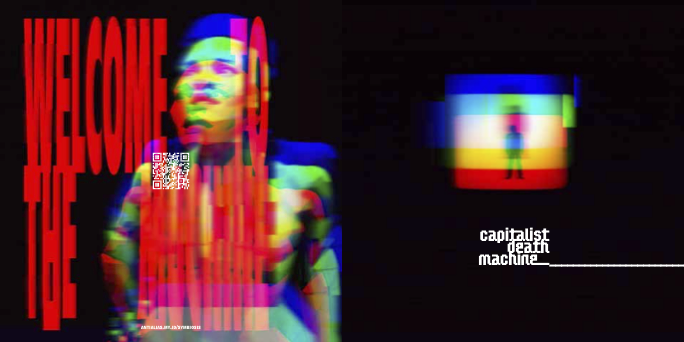
Lyric Booklet Cover — CAPITALIST DEATH MACHINE (CDM)

Lyric Booklet Spread — CDM lyrics in binary with QR access
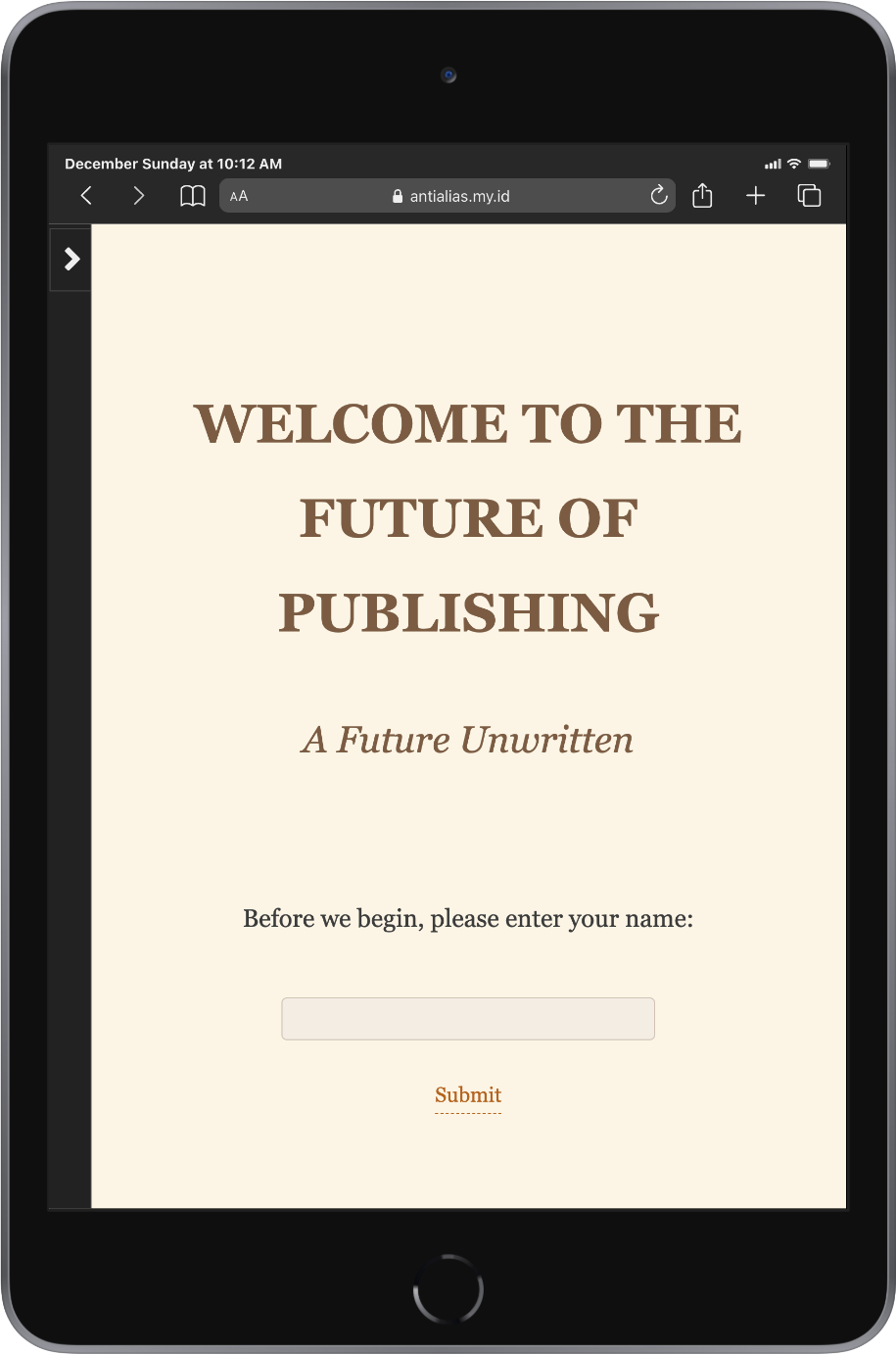
Digital extensions — QR codes, NFC points, and a Twine-based set of short scenes that open only if the reader chooses to enter them.
Together, these pieces function distinctly but behave as one environment.
In Practice
Within the booklet, optional paths appear. Scanning a QR code leads into a short digital simulation written in Twine (an open-source tool for telling interactive, nonlinear stories). Narrative branching is limited but controlled; small variations in text, including the use of the user’s name, create the sense that the world is adjusting to the user’s choices even when the structure remains fixed.

The system begins with the physical object. Readers hold the digipak, flip through the booklets, and listen to the album. The booklet’s rhythm is intentionally slow. Photographs are saturated, ominous, and cerebral, encouraging the reader to sit with each spread before moving on.

A printed booklet provides a linear flow and grounded experience around a topic that is novel, charged, and misunderstood.
The project works by nudging the reader between print, sound, and digital layers, creating moments of familiarity that lead into spaces that discuss AI without an answer. The print object anchors the experience; the digital layer introduces deviation; the album sets the tone.
The Album
The CAPITALIST
DEATH MACHINE

At the center of Symbiosis is Capitalist Death Machine (2024), the human–AI album that captures the emotional and structural logic of the project. The project is not built outward from the booklet; it is built outward from the album.
CAPITALIST DEATH MACHINE is a reflection of my fears, biases, hopes, and disappointments, with AI serving as both the concept and the execution. The album’s name was inspired by a conversation with ChatGPT in which it was asked, "What are you?”
In building the album it became clear it was a product of the sum of its parts. While I developed the lyrics, the magic emerged in the rapid iterative process—taking the seed of an idea and initiating a chain reaction, where AI offered an endless supply of fuel.
Randomness and errors can be found throughout CAPITALIST DEATH MACHINE, included by design. Glitches, quirks, distorted vocals, hallucinations—they weren’t predictable, but over time I learned how to coax the model into producing them to a detailed degree. In this way, I become a curator, an overseer of idea and creativity, channeling the essence of an idea through tools I can influence but never truly control.
The album establishes the tonal logic of Symbiosis through its emotional weight. That tone carries into the imagery, which holds a quiet, disturbing heaviness that mirrors the album without flattening it. The booklet and digital layers translate this logic into physical and digital form. Here, Capitalist Death Machine functions less as a standalone project and more as the organizing core of Symbiosis.
Orientation Begins Promptly…
The Dawn of Compliance (2025)
Drawing on my thesis work exploring non-traditional urgent publishing methods as a form of resistance, printed zines and booklets were passed secretly through the office space as the night progressed. These objects formed the basis of an organized underground movement that grew in resistance to the corporate power structure. People scanned QR codes, tapped NFC points, and pieced together how the system functioned without receiving a direct explanation. The space shaped their behavior through indirect and contradictory cues.
Dusk, a resistance manifesto zine, (Dawn of Compliance)
The activation made visitors acutely aware of the absurdity of a system they inhabit daily. In Symbiosis, the logic is subtle; in Dawn, the same logic becomes environmental. Visitors realized the world had rules only after they were already following them. The project became a study in how easily people adapt to systems that appear neutral or helpful on the surface.
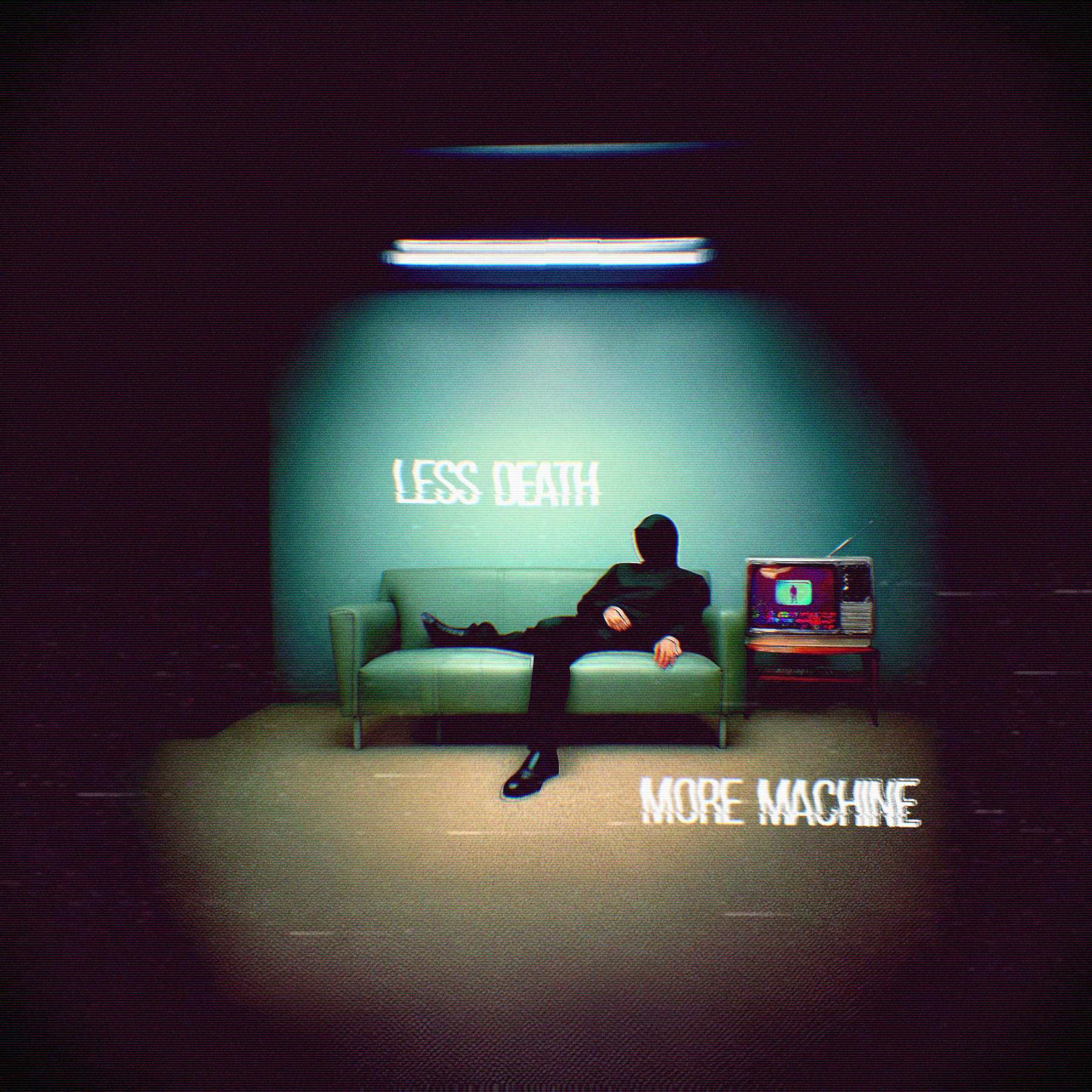
Dawn of Compliance was a one-night activation held in an unused office space in Somerville, aligned directly with the logic of Capitalist Death Machine. The space I produced was staged like a compliance orientation: ‘new hires’ were ushered into a conference room with rickety wooden auditorium seating, looping messages on CRTs, and exposed to an artificial intelligence Machine that calmly reassured them: you have nothing to be afraid of.
Significance
Symbiosis examines how humans navigate systems when they feel violated by automation, and how new meaning forms when control is shared between human intention and machine output. It treats AI as one influence among many rather than a defining force or a replacement. The project helped me understand how small decisions in pacing, sequence, and structure can create emotional responses without explicit linear narrative.
For me, the work clarified that authorship becomes most interesting in the negotiation: the point where intention meets unpredictability and the result is neither entirely controlled nor entirely accidental. Symbiosis is a way of studying that balance.
The project began as a reaction to the anxiety surrounding AI, but working through it made that fear productive; it helped me see how curiosity can lead to learning instead of paralysis. It also made me more aware of how different people experience these conversations, especially when they feel threatened or displaced by technology; meeting them where they are matters. The project further clarified that cultural anxieties about AI are rarely about the tools themselves, but about the broader systemic pressures people are already navigating.
When it comes to industries like publishing, though, the stakes are undeniable. Nearly every step of the publishing process can and will be touched by AI in some capacity soon. Recognizing an inevitability is the first step towards taking control back. There should be no question: profits saved will not necessarily be profits shared. AI won’t overthrow us, but it will optimize the Capitalist Death Machine. The question becomes, what must I do to be prepared?

Credits
Danny Rosenberg: Concept, writing, design, production
Tools: Print production, Twine, Suno, ChatGPT, Claude, Adobe Creative Suite, video production tools
Media: Digipak prototype, booklets, album, interactive sites, projected video, three zines
(2024-2025)
Special Thanks
Alyn Gamble: Advisor/Mentor
ALSO Studios x Somernova (Somerville, MA): Event
Allison Tannenhaus: CRT
ROCKET Magazine: Model, beauty
Event footage by Daniel Montoya @theindiemind
The DAWN of Compliance - Short Documentary by Daniel Montoya