

(2025)
Anti Alias as a system for writing, imaging, and staging music.
An identity framework expressed through sound, print,
installation, and deliberate human–AI iteration.
Concept
For Promotional Use Only is a songwriting experiment translated into a physical listening system.
Under the name Anti Alias, I wrote a series of songs over several years and used AI tools to create alternate versions: new arrangements, genres, and mixes built from the same core ideas. The project asks what happens when one body of work branches into many forms, and how listeners respond when those branches are treated as tangible objects rather than invisible files.
The system lives primarily in the real world: posters, cassette tapes, a catalog, a vending machine, and a tap-to-listen wall. AI is present as a tool inside the process, not as the subject of the work. Visitors encounter the songs first as physical media; only then do they discover how they were made.

System Overview
The project runs across two installations:
Synthtember
An art-and-technology exhibition organized around the theme Deviations.
I used this show to prototype the core concept: unreleased Anti Alias songs, each iterated through rapid human–AI collaboration and presented on cassette tapes to be played on a cassette player. Gig posters and flyers plastered the wall, creating a punk-grunge aesthetic to counter AI’s perceived sterility.
(New Alliance Gallery, Somerville MA, September-November 2025)
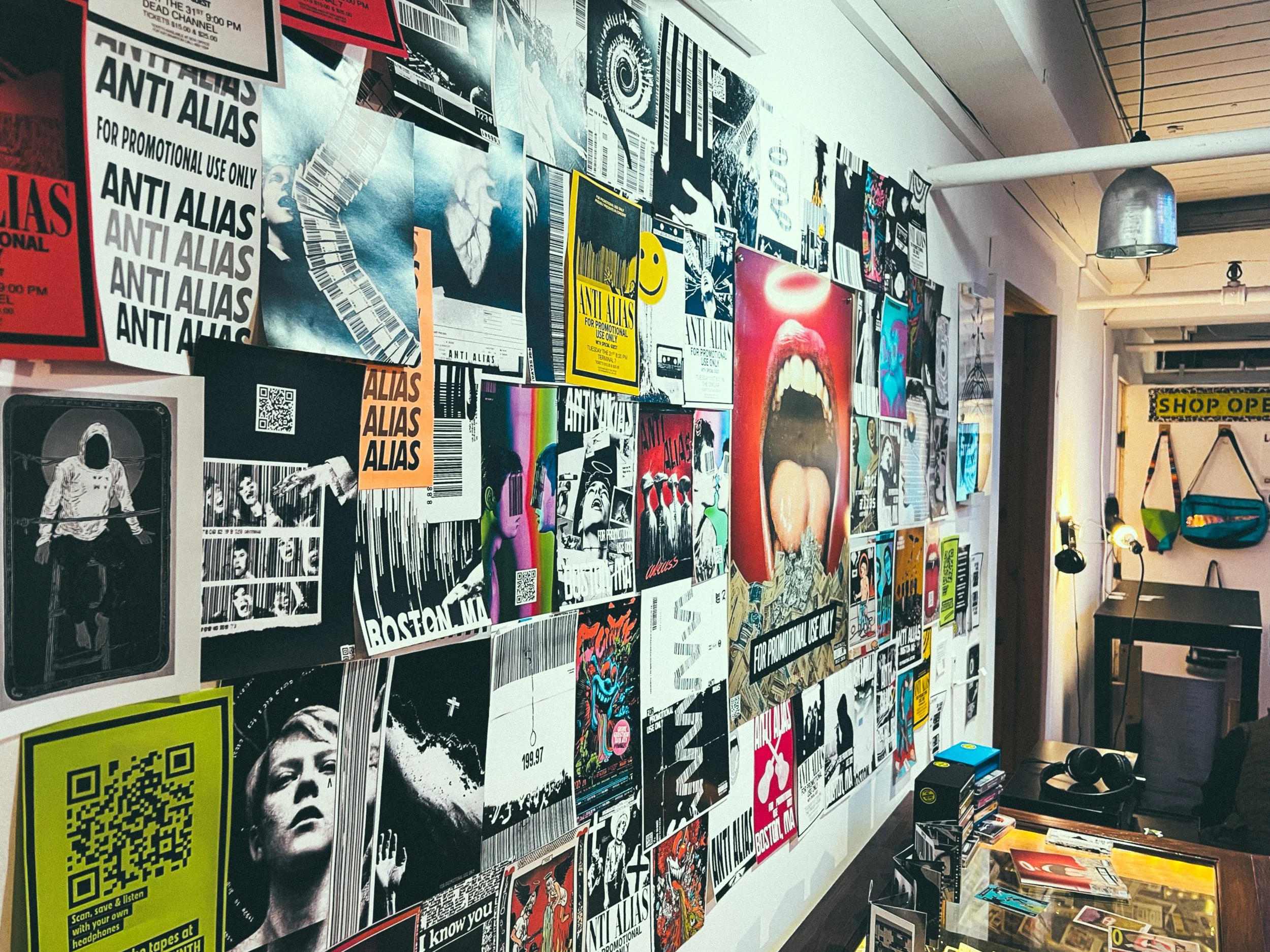
Anti Alias branded gig poster wall
FP3 Gallery, Boston
A subsequent solo installation that expanded the same framework from Synthtember into a fully realized listening space. The show included a printed catalog, a vending machine, and a wall of posters and tapes that visitors could activate with their own phones.
Both installations were linked to custom websites that mirror the gallery wall: animated posters, each leading to a dedicated page where visitors could play Side A / Side B versions of a track on a virtual cassette.
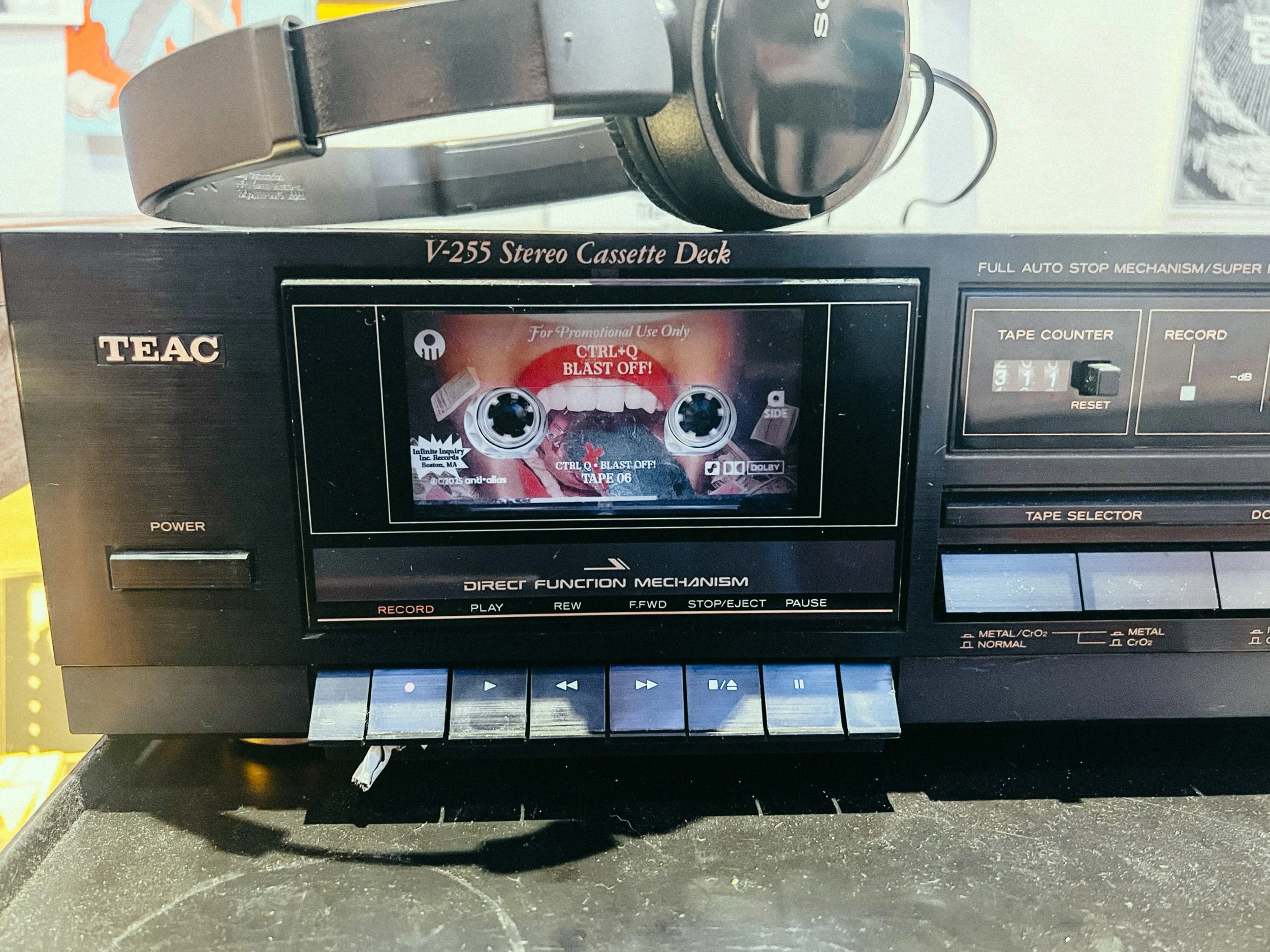
Cassette player loaded with custom cassette
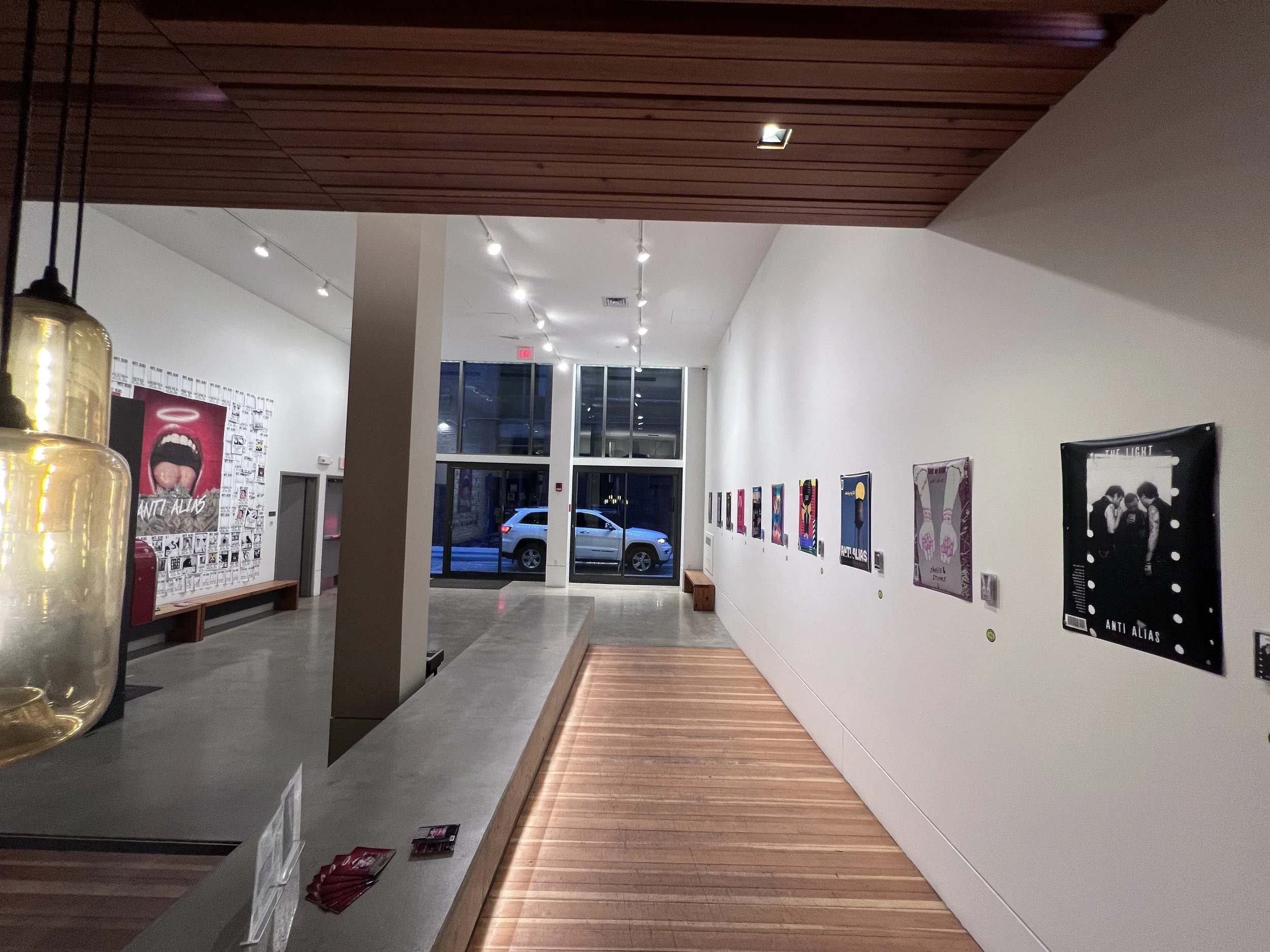
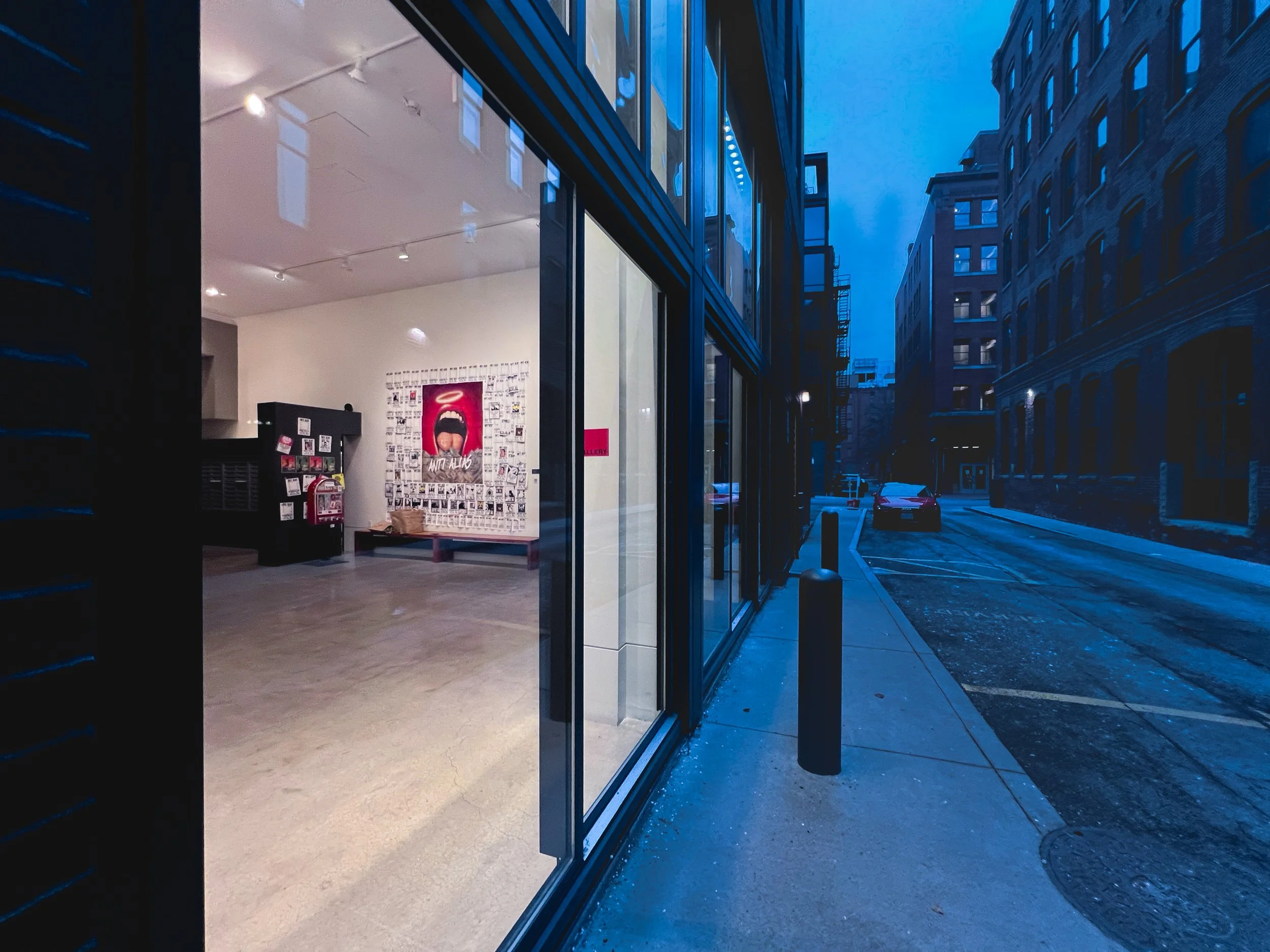
View from gallery entrance
All elements of For Promotional Use Only represent my original creative work, from lyrics and songwriting to visual design
Components
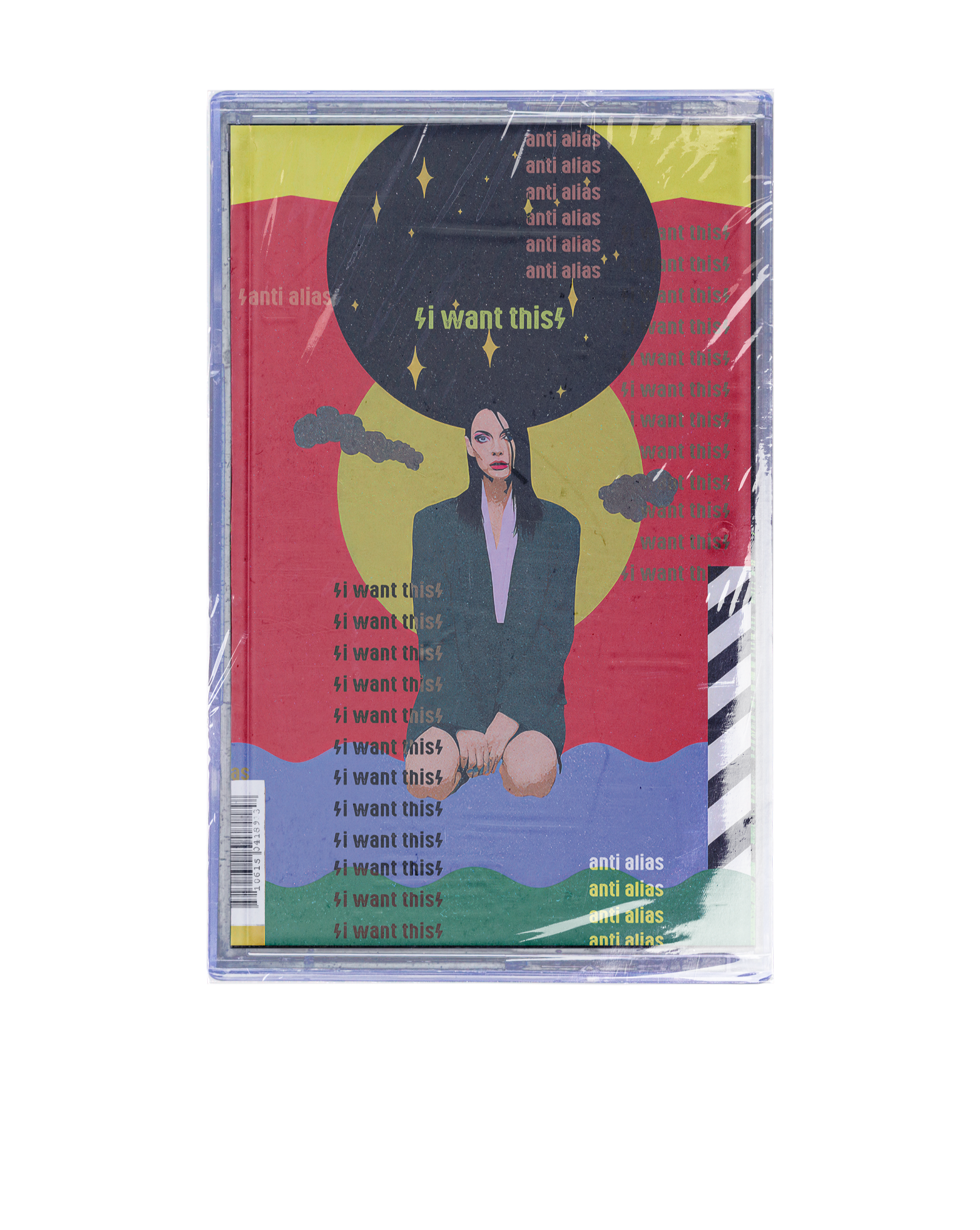
Songs and Cassettes
Each track begins as a handwritten song – usually a voice memo or demo – then moves through short, iterative runs with AI tools. The final versions are recorded to physical cassette tapes with custom J-cards. The back of each J-card includes handwritten prompts and notes from the AI runs, making the process visible without foregrounding it.
Posters to Web Animation
Every tape has a corresponding poster. On the wall and on the website, the posters function as the primary visual entry point. In the gallery, they are static prints. Online, the same images animate when a visitor pauses on them, then lead to a page where the cassette box shrinks into an interactive tape with Side A / Side B toggles and a play/pause button.
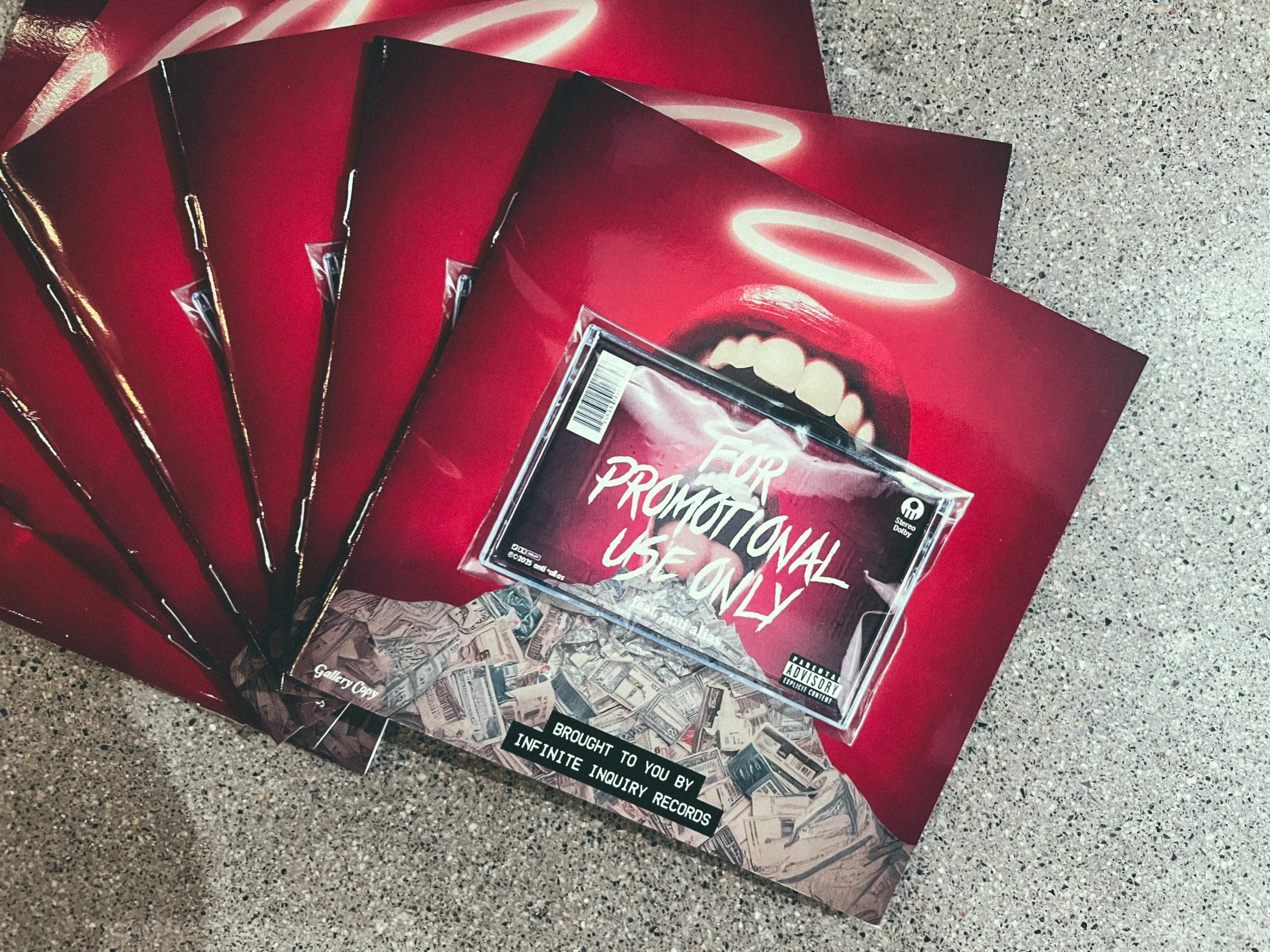
Catalog
A full-color catalog reads like a cross between liner notes and a product catalog: each spread shows the tape, its poster, a way to access the track, and handwritten prompt notes. QR codes in the catalog provide a second way into the same listening pages.

Vending Machine
At FP3 Gallery, a modified vending machine dispensed trading cards and stickers related to the project. Each item carried a small QR code linking back to the listening environment. The machine provided a playful, low-stakes way to approach the work and gave visitors a physical piece to take away.
A person purchases a collectable card from the vending machine
Tap-to-Listen Wall
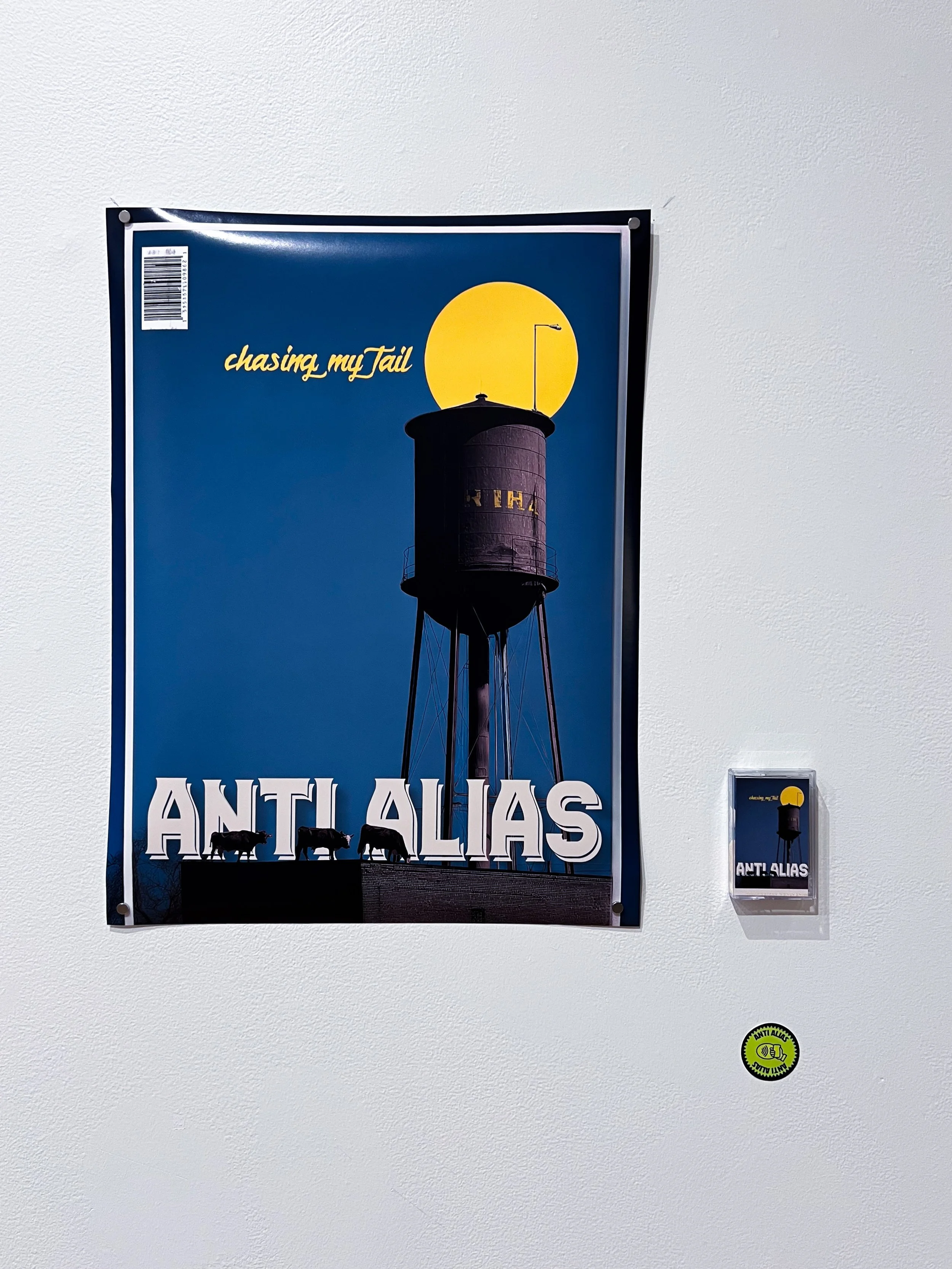
Poster, mounted cassette, and NFC sticker
Tapping the green NFC-activated sticker with a phone allowed visitors to open the track on their own device. Instructions were printed on cassette j-cards mounted to the wall and repeated in the catalog.
Tapping the phone to the NFC sticker pulls up the website, no app needed
This redundancy was intentional. It created multiple entrances into the same system and made it easy for visitors to move between seeing, tapping, and listening without needing a guided tour.
In Practice
The FP3 installation was designed as a meditative listening space rather than a performance space. A long bench ran the length of the posters, and visitors were encouraged to sit, scan, and stay with the work. The only sound in the space came through their own headphones.
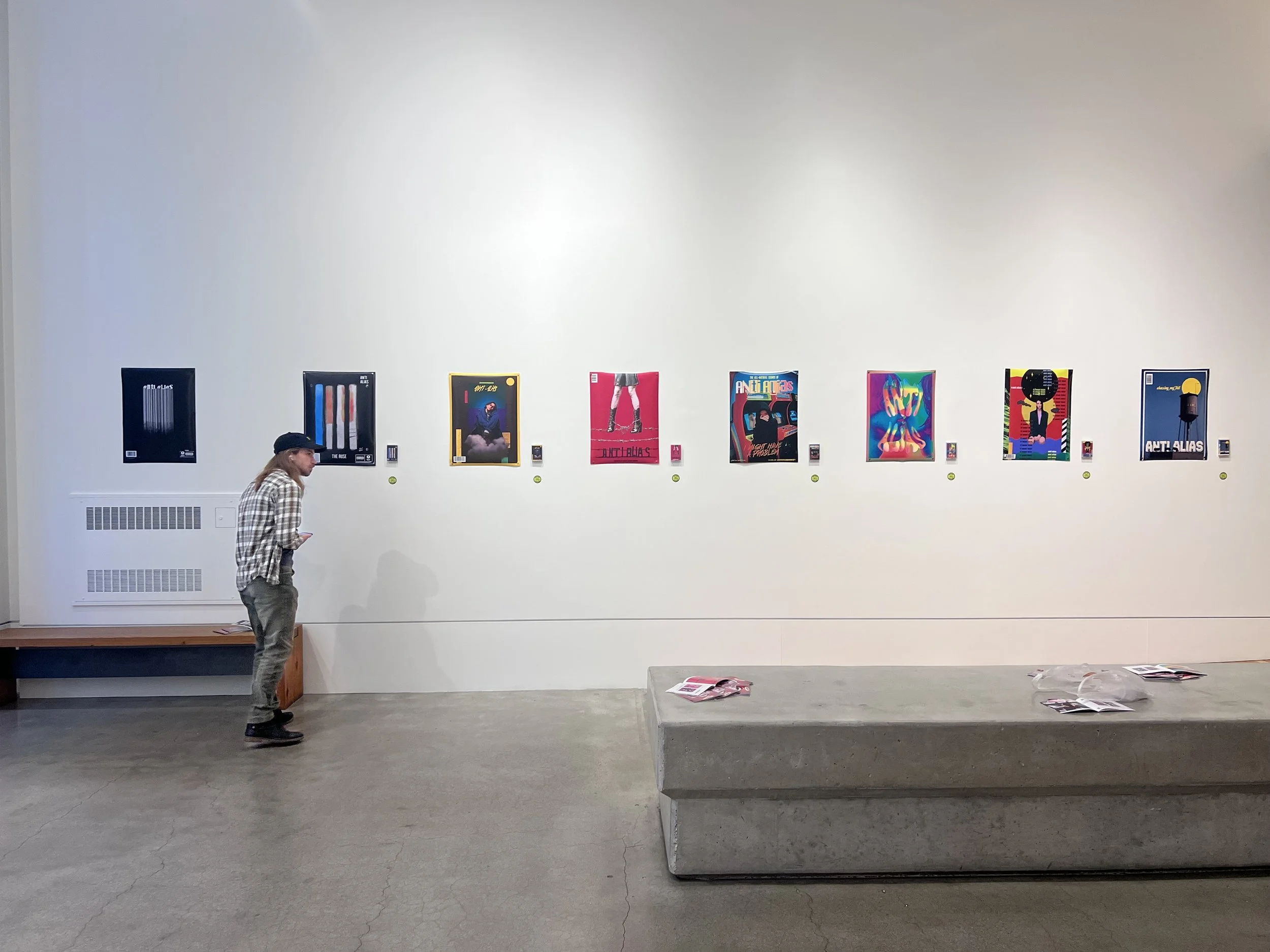
A visitor listens to a virtual cassette after tapping the NFC sticker
Many people who initially described themselves as “anti-AI” still interacted with the system once they were drawn in by the posters, tapes, and vending machine. The novelty of tapping a wall, pulling a card from the machine, or scanning the catalog created a small pause where expectations could loosen; inside that pause, the work was heard on its own terms.
Analytics from the tap targets and listening pages confirmed what I observed in the room: clusters of attention around certain posters, repeat visits to the same tracks, and multi-minute listening sessions that matched the time people spent on the bench. Visitors didn’t skim. They stayed; they scrolled; they returned, sometimes after they left the exhibit. 150 people generated more than 300 sessions and hundreds of deep-engagement events.
The data is not the focus of the project, but it gives me a concrete record of how people moved through the system.
Significance
For Promotional Use Only explores how format and environment can shape the way AI-assisted work is received. The project deliberately separates process from presentation: the structure foregrounds my songwriting and the physical media while allowing the AI component to surface slowly, through prompts, labels, and conversation.

Handwritten ‘prompt’ used to generate track found in print catalog
The installations create a small counterpoint to the usual experience of AI online. Instead of endless, disposable output, visitors encounter a finite set of tracks fixed onto physical tapes and arranged in a deliberate room. Listening requires effort – walking up to the wall, tapping, sitting down – and that effort appears to increase attention rather than shorten it.
This project connects directly to my broader questions about:
how human and machine systems coauthor media
how physical formats can mediate anxious topics like AI
how designed environments can open a more nuanced, less polarized space for reflection
It also links back to Symbiosis and Joe Is Dead through its use of print, digital interaction, and structured choice as core narrative tools.
Credits
Danny Rosenberg / Anti Alias: Concept, songwriting/lyrics, music production (traditional, AI-assisted), visuals, digital / web design, video, NFC & QR integration
Tools: Suno, Udio, ChatGPT, Midjourney, Sora, Adobe Creative Suite
Special Thanks
Synthtember: New Alliance Gallery, Allison Tannenhaus
FP3 Gallery: Paul Duffy, Caryn Liu, Aruna Evan, Allison Tannenhaus
Krina Patel: Vending machine (Mini Art Mart)