
Joe Is Dead.
Joe Is Dead (2024-25) is a grocery gospel built from print, performance, and myth.
The story follows Dan, an crew member at a friendly neighborhood grocery store — a company that presents itself as reassuring and communal as it tightens its grip on labor behind the scenes. Inside this world, belief is manufactured through organized religion, paperwork, repetition, and corporate certainty.
The book relies on format, page structure, and material choices as active parts of the storytelling. Authority is constructed through weight, typography, and rhythm, only to be slowly destabilized. In the narrative, the crew members are trapped searching for meaning inside profit-driven systems that were not designed for their own clarity. Readers, too, do not receive answers directly; instead, meaning is assembled through fragments and scraps, notes hidden in the margins or incomplete documents found in the back of the book.
The project began as a singular narrative and rapidly expanded into an ecosystem, including a main volume, a sacred-text counterpart, a graphic novel inspired sequence, internal documents, a one-man musical, and a digital onboarding experience that parodies institutional bureaucracy and retail work environments. Humor is central to the experience, but it is not loud. Rather, it emerges from the calm seriousness and absurdity of the form itself.
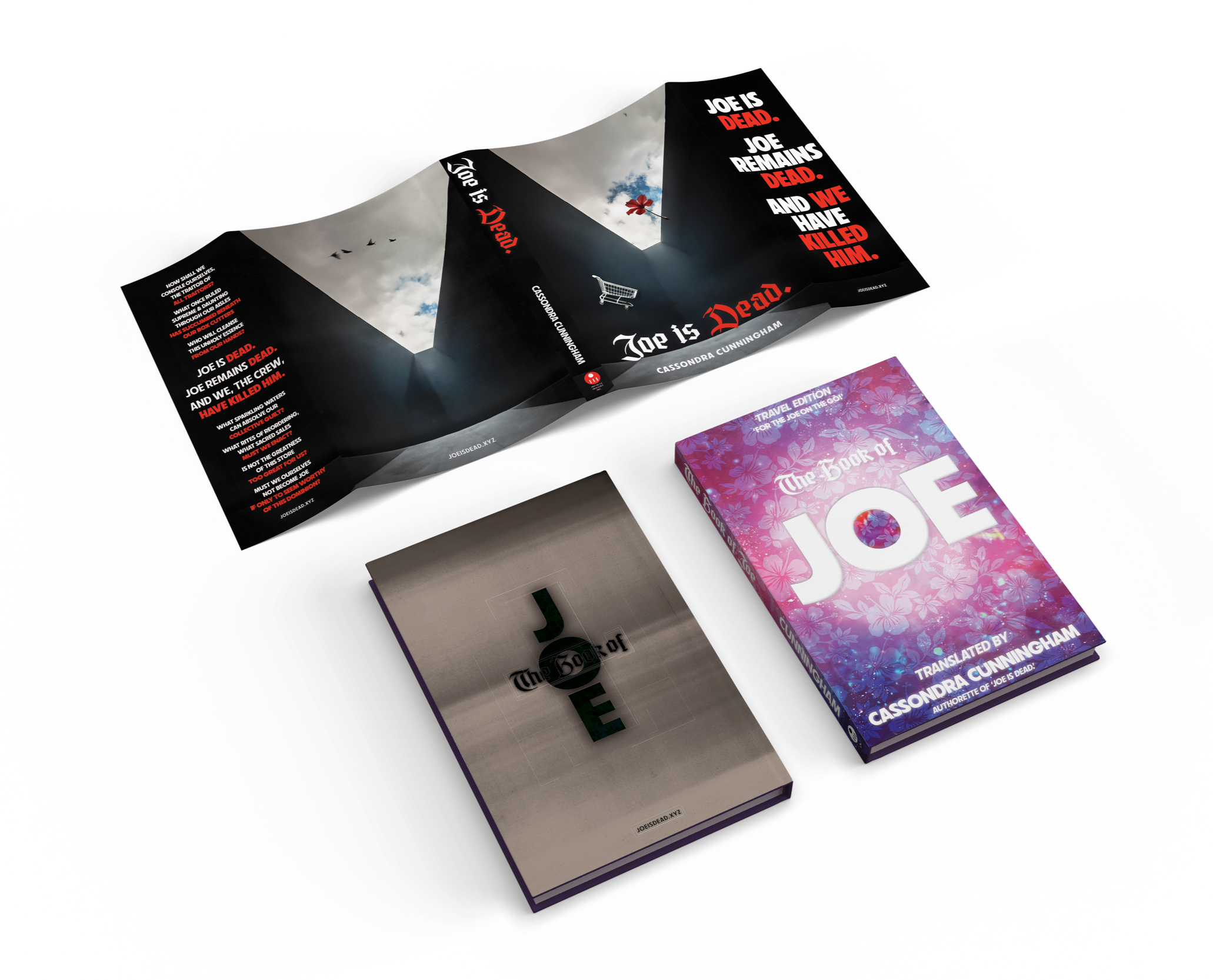
A Story of Labor, Belief, and Affordable Groceries.
The structure of the book creates the structure of the world within.
Page layouts begin orderly and organized: two columns, clean margins, conservative pacing. “The Book of Joe”, the sacred text that the crew follows, is structured after the King James Bible. Pages modeled after medieval manuscripts and incunabula literally shape the an object universally recognized to be consecrated.
As Dan and the crew become destabilized by efforts to quash unionization, the book as an object does too. Columns slip. Marginalia bleeds into the main text. The fourth wall is broken as the book begins to talk back. The reader navigates these shifting densities, pauses, and interruptions designed to reproduce the internal friction of a corporate hierarchy that boasts coherence but cannot maintain it.
Visual Language

The illustrated sequence at the center of the book operates as an illuminated rupture. Dream-like imagery is overlaid with hand-shaped typography that moves with the emotional tone of the story — stretching, breaking, curling, collapsing. The sequence follows fellow crew member Alex as he travels through hell to retrieve Dan, sacrificing himself for Dan’s ultimate transformation. It is not a literal illustration of the plot; it is an emotional break from the system for both character and reader.
A collection of documents — memos, HR reports, legal notices, newspaper articles — can be found at the end of the book . This ephemera pulls the reader out of the central story into the “real world”. Together they reveal how the company and Dan’s actions impact not only plot but the structure of the book itself. The book closes by reprinting the opening pages, now with Dan’s name replacing Joe’s, completing the cycle of absorption and reinvention that corporate institutions perform with no emphasis on the human cost.
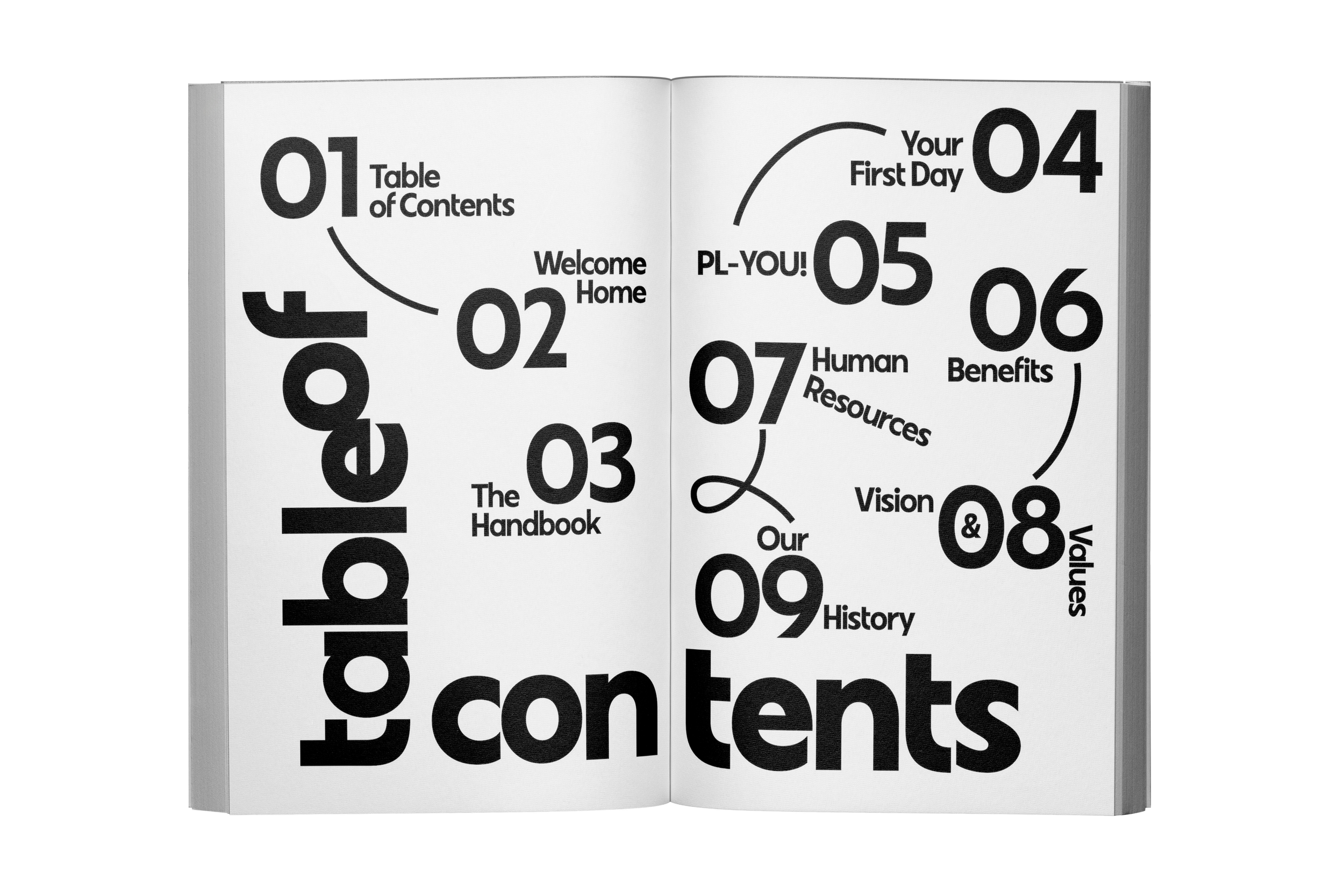
Components
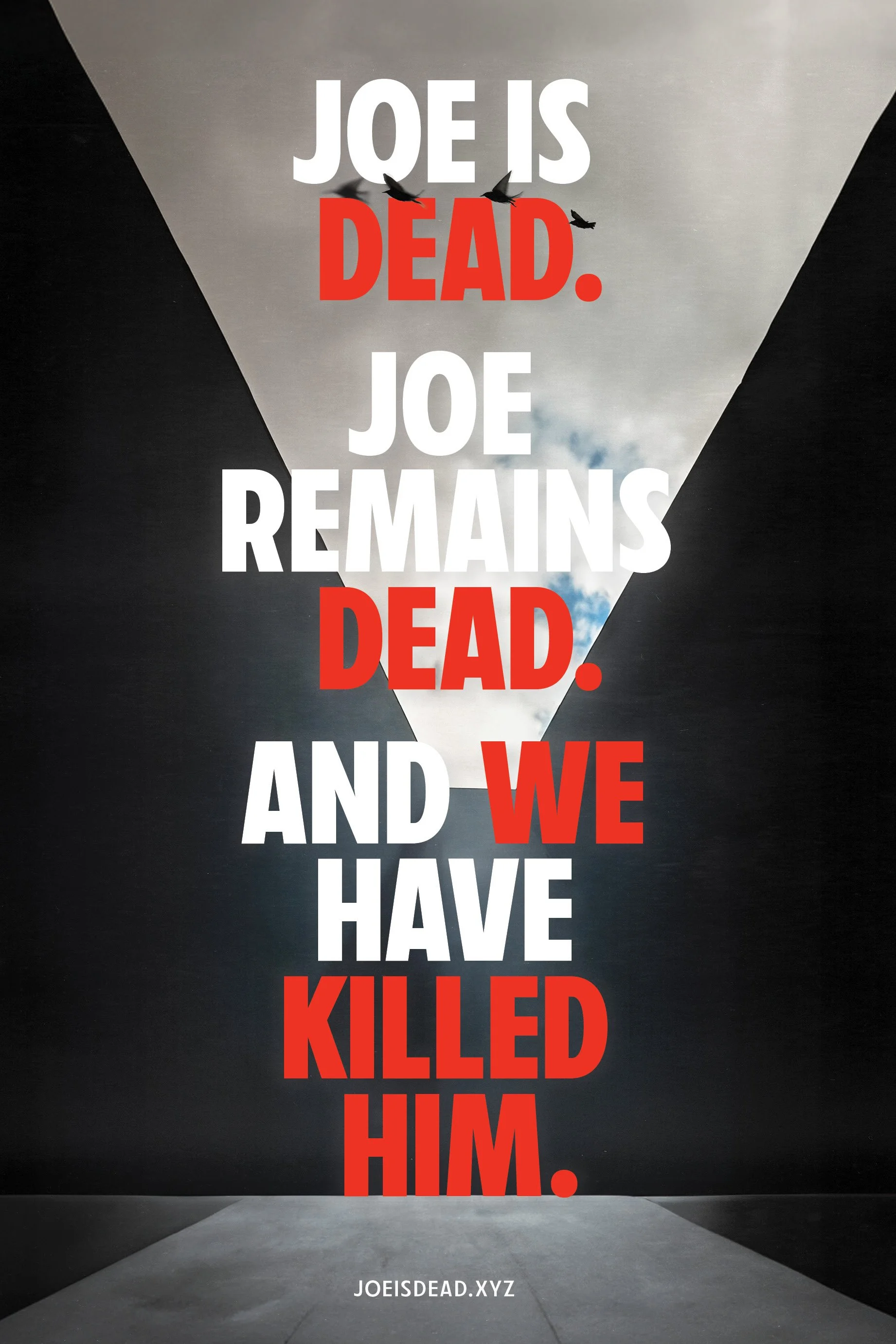
Back Cover, Joe is Dead (Paperback)

The Main Volume:
Joe is Dead.
Internal Spread, First pages of The Book of Joe, Joe is Dead (Paperback)
The primary book establishes the narrative voice and the authority of the object. At 609 pages, linen-wrapped hardcover, its weight mimics a bible or religious text. Early chapters follow a predictable structure; later chapters fracture. Typography, spacing, and pacing are used as emotional cues. The structure loosens as Dan’s role in the company begins to blur.

The Book of Joe
A standalone paperback version of the bible-like sections of the main volume. Compact, portable, and sincere. It functions as the in-world scripture that informs the company’s mythology. The format gives it authority; the content reveals how easily authority can be constructed.
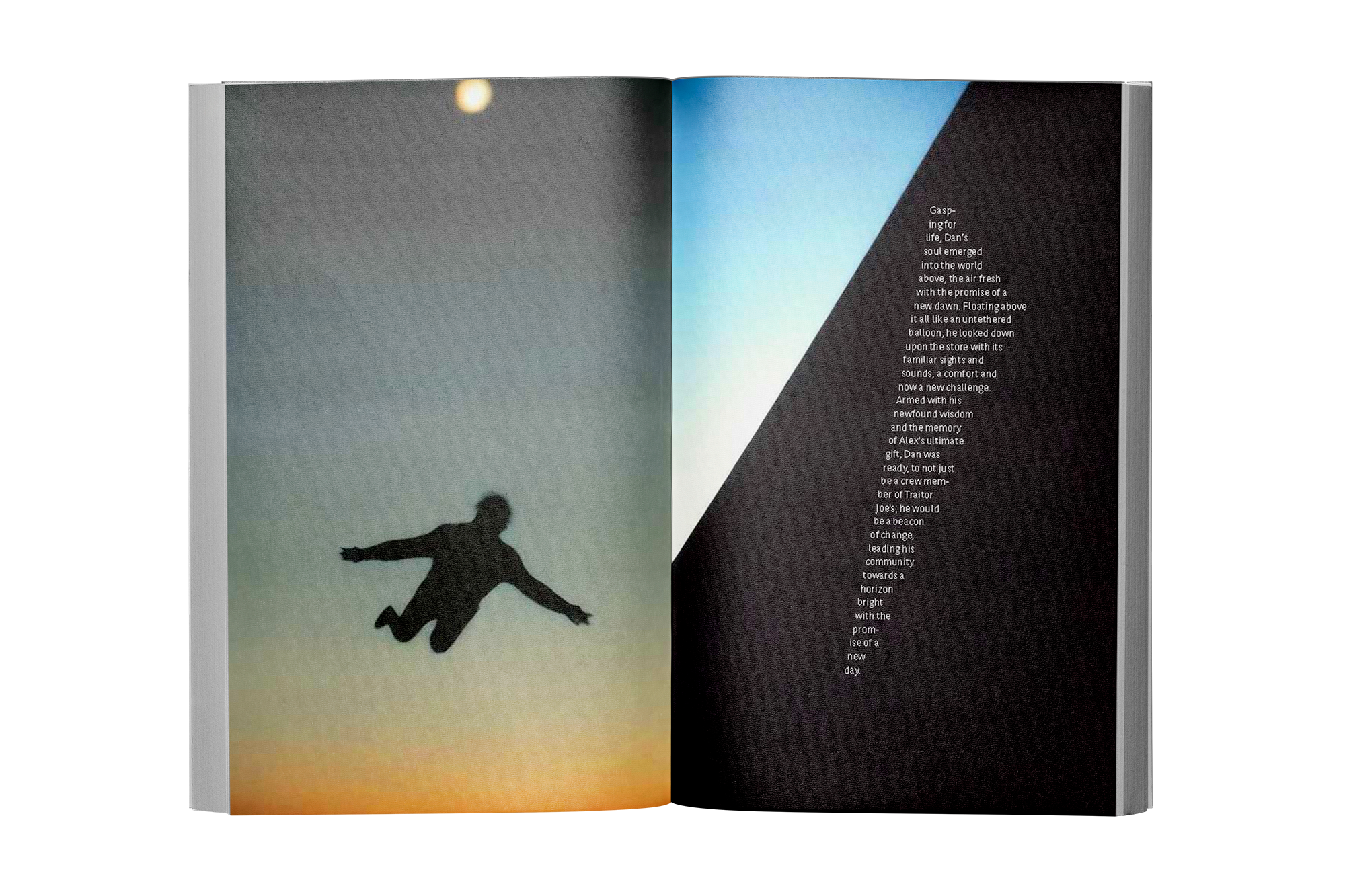
The Illustrated Center
A full-color middle section constructed using AI-generated image elements paired with text that has been manually distorted, stretched, or fragmented as the emotional tone shifts. This visual logic conveys Dan’s interior collapse more directly than narration alone could. The imagery does not explain the story — it performs it.
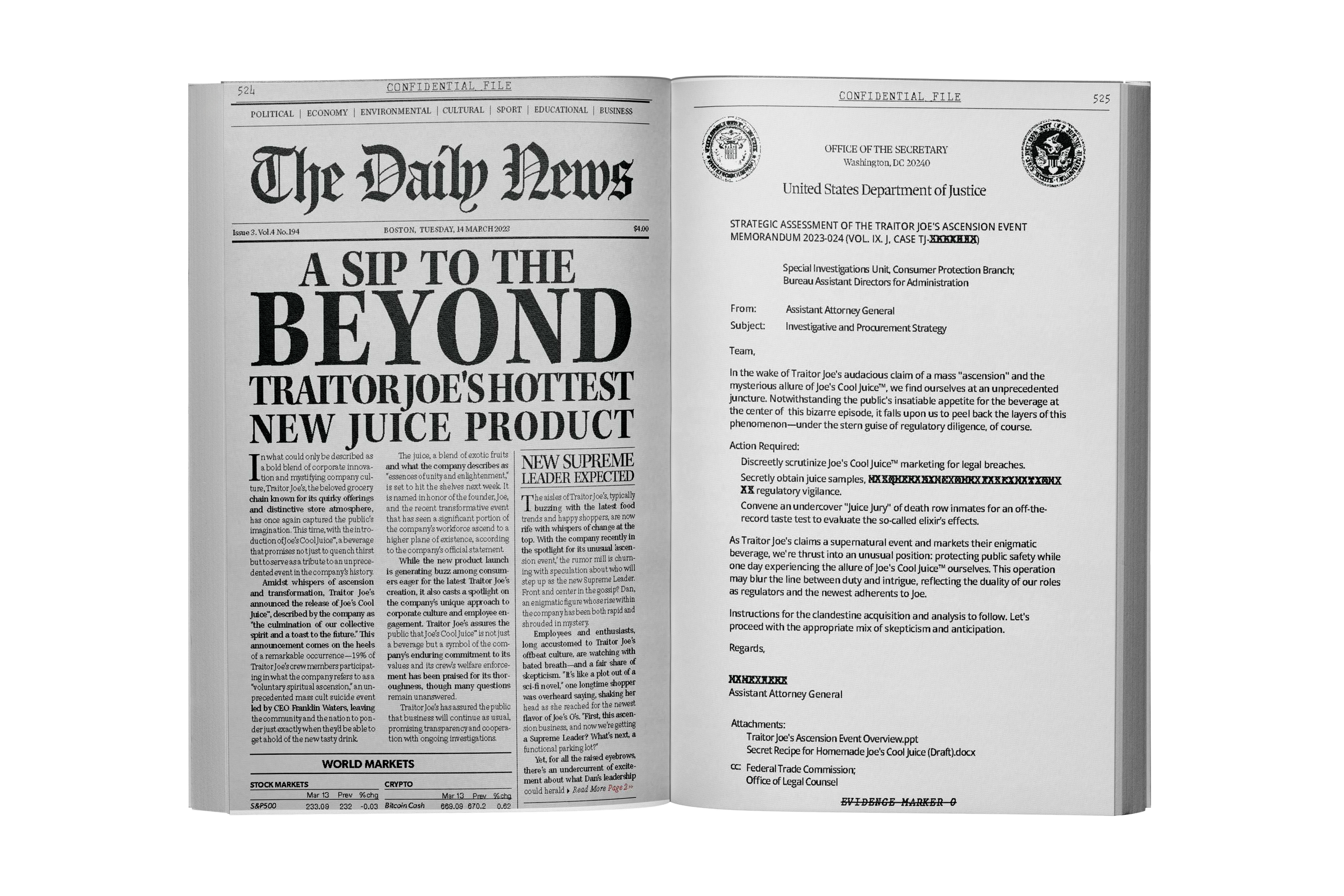
Back of Book
A collection of in-world documents: HR emails, internal memos, newspaper clippings. These artifacts widen the world and institution’s voice. They also transition the reader into a meta-level where Dan escapes the confines of scripture and enters the administrative reality that ultimately reabsorbs him.
The repeated opening of the book at the end — with Dan’s name replacing Joe’s — signals the cyclical logic of institutions that replace individuals while preserving myth.
Digital Onboarding
Accessed through QR and NFC tags, the onboarding is a fifteen-minute Twine-based sequence that loops, redirects, and resists straightforward navigation. Its tone resembles standard corporate training, but the structure slowly traps the user in circular logic, mirroring the company’s internal belief systems.
The onboarding echoes the rituals of compliance training: cheerful tone, circular logic, escalating demands for acknowledgment, and eventual surrender into Joe’s worldview.


How It Works
Joe Is Dead works through slow assembly rather than pure exposition. The reader moves across text, visual sequences, scripture, marginalia, and documents; each form contributes a small part of the world, but none offer a stable center. Meaning emerges through the act of navigating these shifts and realizing individually they are meaningless.
As the narrative collapses, so does the book’s design structure
The book’s structure changes as Dan finds himself among the aisles. Early pages are orderly; later ones distort. Margins compress, captions drift, and the graphic sequence interrupts the narrative with imagery and typography that follow his internal collapse. Design becomes the primary narrative device.

Interactive spread directing the reader to the website
The digital onboarding extends this faulty logic. Accessed through embedded QR and NFC tags, it guides the user through a looping, corporate-inspired interface that gradually removes the sense of choice. Print and digital components work together to shape perception through format and constraint.
In Practice
Joe Is Dead circulates quietly, handed from person to person with short warning and no summary. Readers describe the book as unsettling, funny, or “too real,” depending on which entry point they encountered first. Some treat it as a novel, others as a manual, others as an sacred object that needs to be interpreted before it can be read.
At Dawn of Compliance (Symbiosis), the book aligned naturally with the theme of performative institutional obedience. Visitors were able to purchase limited-run copies as part of the compliance exercise. Conversations about the book hover between amusement and discomfort, which is exactly the tension the structure is designed to hold.
The work lives in that ambiguity: it appears orderly, it behaves unpredictably, and it requires the reader to decide what kind of object they believe it is.
Performance
The stage adaptation extends the world into performance. Built as a one-performer musical, it includes more than twenty-six songs written over several years with demos developed through AI-assisted production tools. The format allows Dan’s internal logic to surface directly; humor and dread become more immediate when spoken or sung rather than embedded in print.
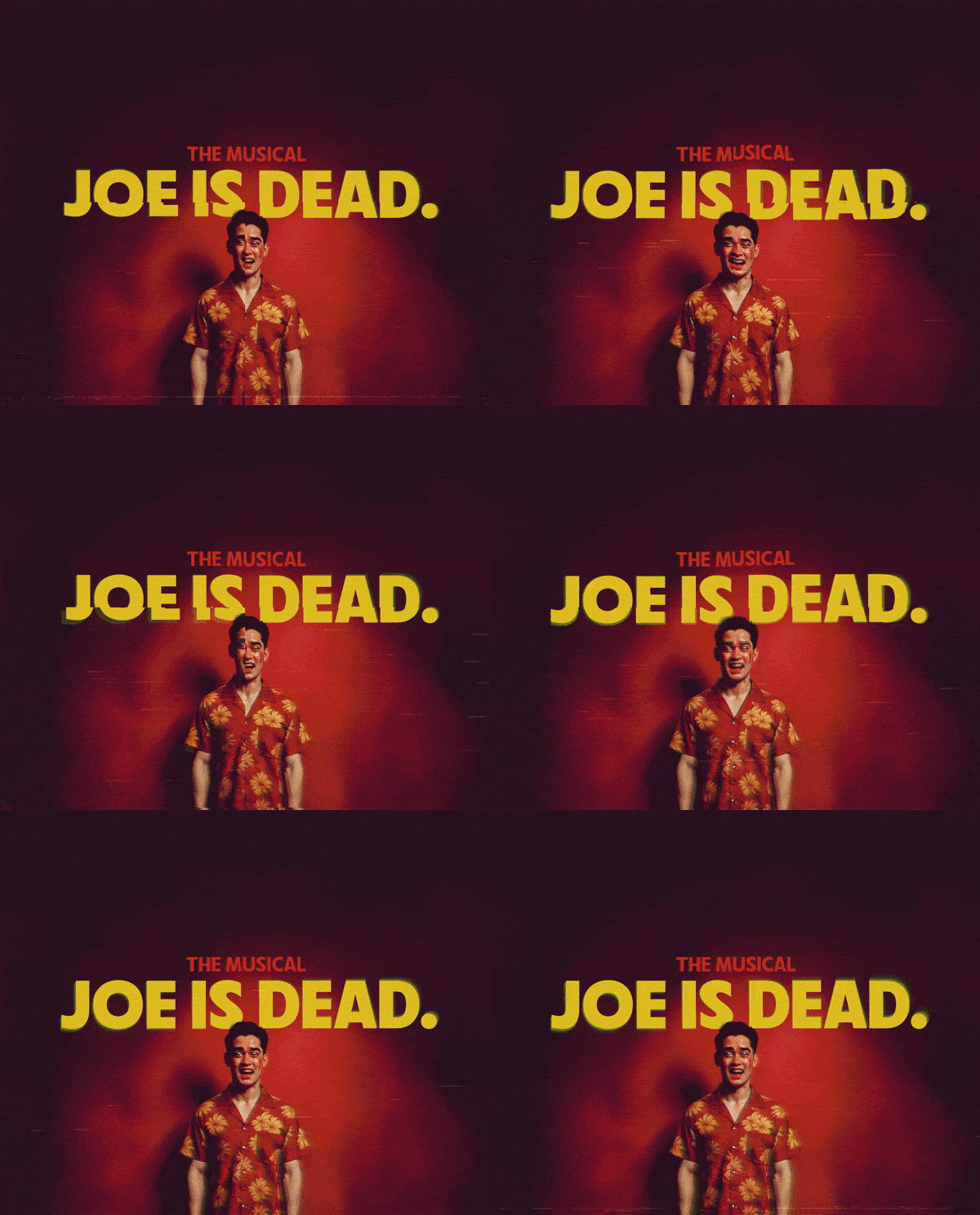
Early Demo, P.L.U. I Love You (What Good Is A Store?), Performed by Suno
The musical isn’t a separate project. It continues the same inquiry by shifting mediums: from book to body, from layout to pacing, from institutional voice to personal voice. It demonstrates how the same world behaves differently when translated into sound and performance.
Significance
Joe Is Dead examines how those in power produce belief and maintain authority through tangible, authoritative print design. The book uses weight, pacing, and structure to show how institutions shape perception long before they make explicit demands. The project treats form as an emotional and cognitive tool rather than a container for story.
This aligns with my broader practice: using material decisions — print, layout, digital interaction — to create shifts in perception and to expose the logic, faulty or flawed, that lurks beneath the familiar. The project sits at the intersection of labor, identity, humor, and structure, which is the same intersection driving my interest in Critical Matter.
Credits
Danny Rosenberg: Concept, world-building, writing, design+layout, onboarding, web design, songwriting+musical construction
Special Thanks
Lisa Diercks: Advisor/Mentor
Alyn Gamble: Advisor/Mentor
2024-2025
Components
Objects: Joe is Dead. (Main book, paperback + hardcover), The Book of Joe, Illustrated center section, Document set, Onboarding (Twine), Website (www.joeisdead.xyz), music
Tools: Print production, Twine, Suno, Udio, ChatGPT, Claude, Adobe Creative Suite, video production tools
Note: Songwriting by Danny Rosenberg, musical prototypes developed with Human–AI audio tools (Suno)