
SYMBIOSIS
A hybrid system of print, sound, & digital interaction.
Symbiosis examines how creative intuition shifts when another intelligence enters the work. It brings print, sound, and digital media into one environment and lets each medium alter how the others are perceived. The project asks how meaning forms when human intention meets machine behavior, and how structure alone can guide attention and emotion.
Symbiosis is borrowed from ecology, where different organisms share an environment and quietly change each other’s chances of survival. Here, the term is applied to a small ecosystem made of a print object, an album, and a set of digital paths that all behave differently depending on how they are used.
The project began as a way to understand what happens to creative intuition when another intelligence enters the process. Instead of treating AI as a single tool or effect, Symbiosis treats it as one species inside a shared environment. The work asks how meaning, emotion, and authorship shift when human judgment, machine behavior, and material design all push on each other at once.
The result is not a single artifact but a controlled situation: a booklet, a human–AI album, and a set of optional digital extensions that form one world. The system tests whether structure alone can guide perception, unease, and curiosity without explaining itself directly.
Symbiosis borrows its name from ecology, where different organisms share an environment and influence each other’s behavior. Here, the idea is applied to a system made of three media: a printed booklet, a human–AI album, and a set of digital scenes. Each part behaves differently on its own; together, they form an environment where meaning shifts depending on the path someone takes.
The project began as a way to understand how creative intuition changes when another intelligence enters the process. Instead of treating AI as a stylistic effect, Symbiosis treats it as one species within the ecosystem. The work asks what forms of authorship or emotional tone appear when human judgment, machine output, and material design push on one another at the same time.
The goal is simple: create a system where the audience moves through print, sound, and digital space, and let their own progression determine what the work becomes. Nothing personalizes to the user, yet the experience feels different depending on how they move through it. Symbiosis studies that gap between what is fixed and what feels alive.
Visual Language
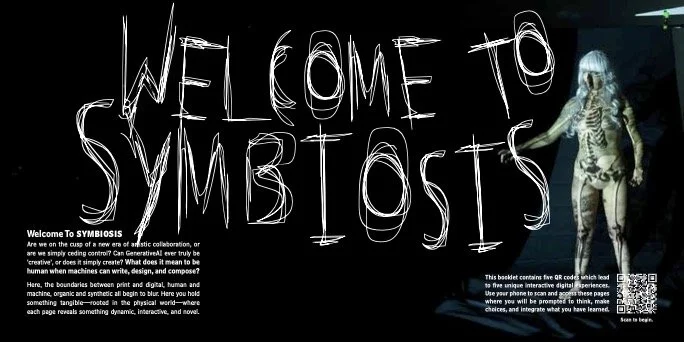
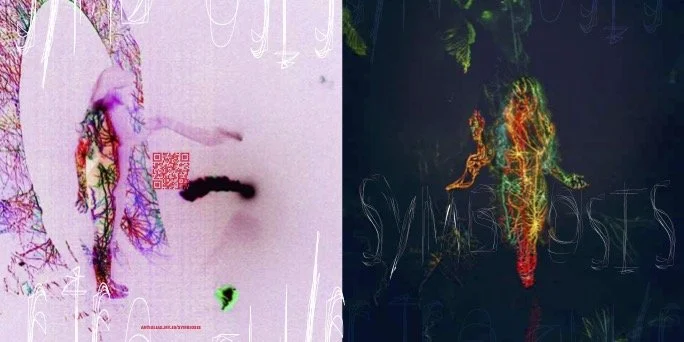
The project uses a series of images created by projecting natural, artificial, and machine-generated visuals onto a model’s body. The poses and expressions were captured to produce a human surface that carries both organic and technological influence. These images form the visual language of Symbiosis; they appear on the cover, across the booklet, and within the digital layer as the system’s primary aesthetic environment.

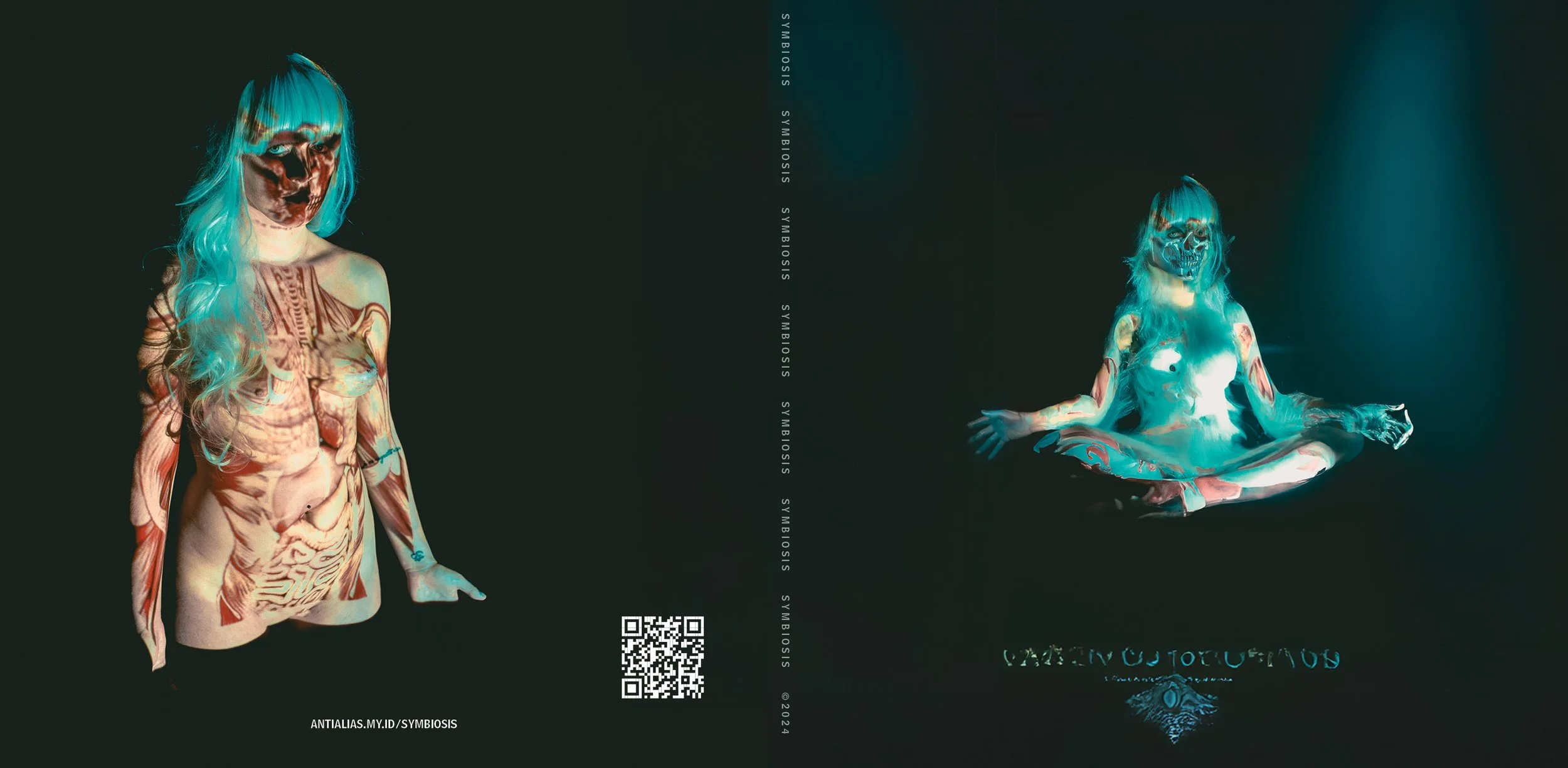
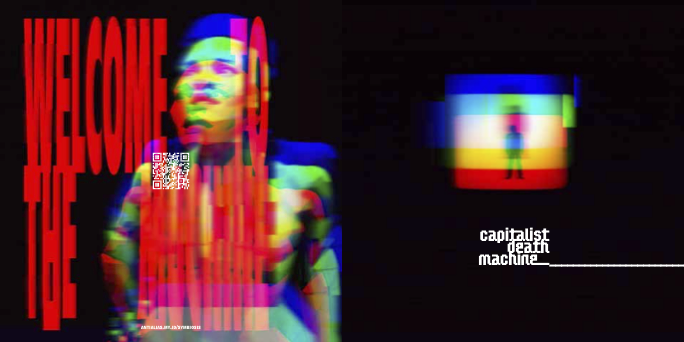
Digipak Prototype — A CD-style case that holds a printed booklet and the album Capitalist Death Machine.
Print Booklet — Sequence of images and short text, paced to slow the reader and set the emotional tone of the system

Digital extensions
QR codes, NFC points, and a Twine interaction layer that expand the world only when the reader chooses to step into it.
Together, these pieces stay distinct but behave as one environment.
How it Works

The system operates in a simple sequence. Most people begin with the physical object: they open the digipak, flip through the booklet, and listen to the album. The booklet’s pacing is intentionally slow. Images recur with small differences, guiding the reader into a rhythm before any digital interaction appears.
From there, optional paths open. Scanning a QR code or tapping an NFC point takes the reader into a short digital scene written in Twine. Each scene contains small variations. The branching is limited and controlled, but the subtle shifts create the sense that the world is adjusting to the user’s path even though the underlying structure is fixed.
AI exists entirely inside the production stage. I generate short audio phrases and text fragments, then cut, reorganize, and edit them. The influence of the model shows up in details: tonal shifts in the music, unexpected transitions, and lines of text that carry a logic slightly outside my own. These details shape how the world feels without claiming authorship.
The system works by directing the audience through three layers — print, sound, and digital — that each change how the others are interpreted. The physical object anchors the experience; the digital scenes create deviation; the album ties the emotional tone together. The mechanics are simple, but the interaction creates the sense that the system is paying attention.


What Are You?
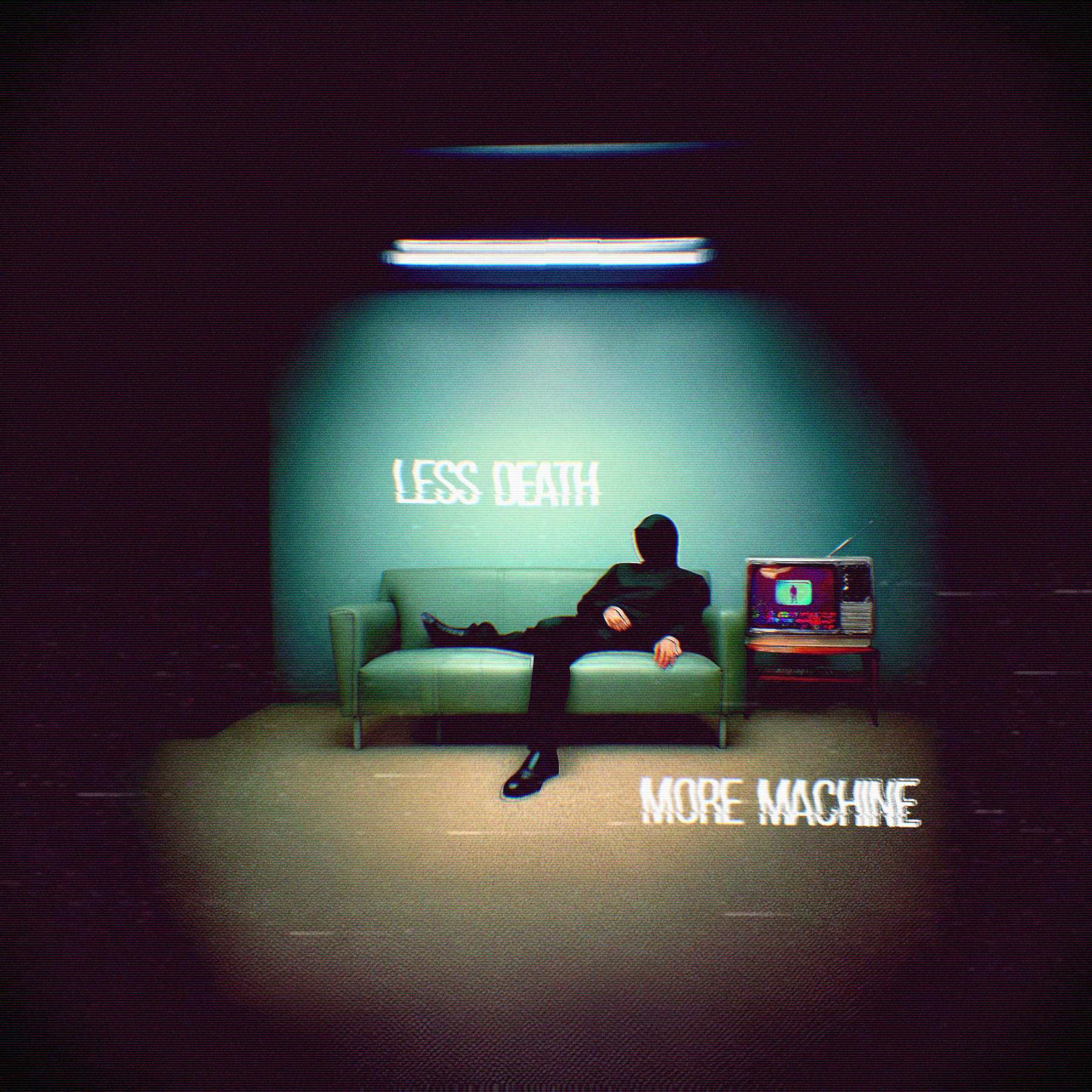
At the center of Symbiosis is Capitalist Death Machine, a human–AI album with its own small narrative spine. It acts as the internal engine of the system: the point where intention and machine behavior confront each other most directly.
The album sets the tonal logic for the project; the booklet and digital layers orbit it. Within this page, CDM is not a separate project so much as the core around which the rest of Symbiosis organizes itself.

dawn of compliance (outcome)
Dawn of Compliance was a one-night activation built partially from the internal logic of CDM. The space was staged like a compliance orientation: auditorium seating, looping CRT messages, bureaucratic instructions, and a Machine that speaks in a tone that is polite, helpful, and slightly off.
Printed manuals, zines, and booklets circulated through the room. People scanned QR codes, tapped NFC points, and pieced together how the system functioned without receiving a direct explanation. The room shaped their behavior more than the instructions did.
The activation made the system visible. In Symbiosis, the logic is subtle; in Dawn, the same logic becomes environmental. Visitors realized the world had rules only after they were already following them. The project became a study in how easily people adapt to systems that appear neutral or helpful on the surface.
in-line video with specifics, maybe video explanation
Working on Symbiosis and its related pieces shifted the way I think about fear, creativity, and how people engage with new tools. The project began as a reaction to the anxiety surrounding AI, but working through it made that fear productive; it helped me see how curiosity can lead to learning instead of paralysis. It also made me more aware of how different people experience these conversations, especially when they feel threatened or displaced by technology; meeting them where they are matters. The project also clarified that cultural anxieties about AI are rarely about the tools themselves, but about the broader systems and pressures people are already navigating. The experience reinforced how much more willing people are to engage when something is physical or shared in real time, whether through print or an immersive environment. In the end, the project clarified what I care about most: using creative work to help people connect, understand unfamiliar ideas, and feel less alone in the process.
“What I Took Away” (THE HUMAN CLOSE)
Symbiosis examines how humans navigate systems that feel partially automated, and how meaning forms when control is shared between human intention and machine output. It treats AI as one influence among many rather than a defining force. The project helped me understand how small decisions in pacing, sequence, and structure can create emotional responses without explicit narrative.
For me, the work clarified that authorship becomes most interesting in the negotiation: the point where intention meets unpredictability and the result is neither entirely controlled nor entirely accidental. Symbiosis is a way of studying that balance.

footer (credits + logistics)
Components
 Digipak prototype
 Print booklet
 Capitalist Death Machine album
 QR and NFC interaction system
 Twine-based narrative
 Visual design and photography
Role
Concept, writing, design, production, sound directionTools
AI text and music models
Twine
Adobe Creative Suite
Audio editing toolsRelated work
Dawn of Compliance activation
Capitalist Death Machine narrative materialsDONT USE
Digipak Prototype — A CD-style case that holds a printed booklet and the album Capitalist Death Machine.
A print booklet
Sequences of images and short text, paced to slow the reader and set the emotional tone of the system.
A human–AI album
Raw musical material generated with AI models, edited and arranged by hand. The machine provides detail and variation; I determine structure and pacing.
Digital extensions
QR codes, NFC points, and a Twine interaction layer that expand the world only when the reader chooses to step into it.
Together, these pieces stay distinct but behave as one environment.
Symbiosis began with a straightforward but persistent question: what does creativity mean at a time when AI can reproduce elements we once considered distinctly human? I was also thinking about the place of print in a world shaped so heavily by digital media, not out of nostalgia but out of curiosity about what each medium makes possible.
As I worked, these questions started to converge. I realized the tools were not simply helping me produce work; they were changing how I thought, especially my sense of flow and intuition. Symbiosis became a way to examine those shifts and to understand the relationships between human and machine, between physical and digital media, and between fear and curiosity. The project is essentially my attempt to understand what happens at those intersections.
Symbiosis began as an inquiry into how creative thought shifts when human intuition meets algorithmic process. Borrowing its name from ecology, the project explores coexistence between physical and digital media—where printed matter becomes an interface and code becomes a form of touch.
The work centers on Capitalist Death Machine, an album and artists’ book created entirely through human–AI collaboration. Structured engagement—the deliberate act of designing friction between analog and digital systems—became the project’s language. Each artifact invites reflection on authorship, empathy, and control within our evolving technological landscape.